
Over more than a decade of development, the crypto market has gone through many phases: from Bitcoin as a monetary experiment to the explosion of ICOs, DeFi, NFTs, and short-term speculative narratives. However, for blockchain to truly become a global financial infrastructure, an important question remains:
👉 How much value can crypto create if it only revolves around itself?
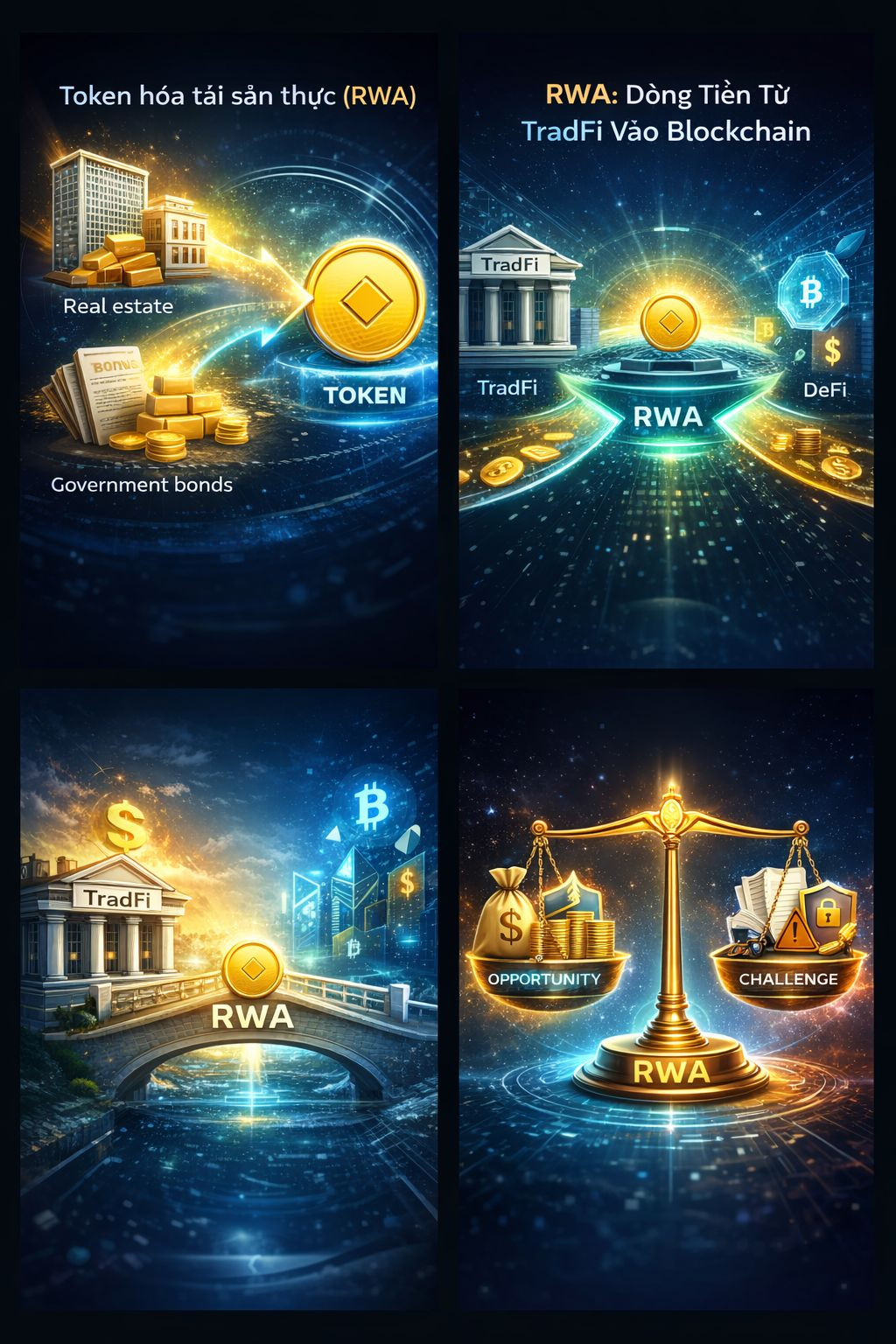
The answer is becoming increasingly clear in the current cycle: Tokenization of real assets – Real-World Asset (RWA) 🚀. This is no longer a small experiment, but is becoming a strategic bridge between traditional finance (TradFi) and blockchain.
🔎 What is RWA – and why is it different from previous trends?
Tokenization of real assets (RWA) is the process of transferring ownership rights, economic rights, or cash flows of physical assets into tokens issued and managed on the blockchain. These assets include:
🏠 Real estate
📜 Bonds, government bills
🪙 Commodities like gold, oil, precious metals
🌱 Carbon credits and ESG assets
🏦 Corporate credit or debt
Unlike many pure crypto tokens – where value mainly comes from expectations and narratives – RWA is directly anchored to real assets and actual cash flows. This creates a fundamental shift: blockchain is not just a place for speculative trading, but becomes the infrastructure layer for managing and distributing real value.
💡 Why is RWA becoming the central trend in the crypto market?
1️⃣ Institutional cash flow needs a stable anchor point
Large investment funds, banks, and financial institutions are accustomed to operating in the trillions of USD across various asset types such as bonds or credit. However, they often hesitate to engage with crypto due to high volatility and the lack of a clear regulatory framework. RWA helps address this issue by:
- Bringing familiar assets onto blockchain
- Maintaining traditional yield structures
- Leveraging the transparency and operational efficiency of blockchain
➡️ This is why RWA is often seen as the “gateway” for institutional capital to access Web3.
2️⃣ Blockchain frees up liquidity that is “frozen”
Many traditional assets with high value are very illiquid, especially real estate and private debt. When tokenized, these assets can:
🔄 Tokenize to allow more investors to participate
⏰ Trading 24/7 instead of relying on business hours
🌍 Accessing global investors without borders
Blockchain does not change the nature of assets but changes how assets are owned, traded, and circulated.
3️⃣ DeFi needs RWA to mature
DeFi has proven its ability to operate autonomously without intermediaries, but most returns in DeFi still come from internal tokens and incentive loops.
RWA helps DeFi:
- Has more stable collateral 📉
- Tying yields to the real economy 💵
- Reducing systemic risks when markets are highly volatile
➡️ RWA does not make DeFi less appealing, but helps make DeFi more sustainable in the long term.
🧱 Popular RWA asset groups today
📜 Bonds & bills
This is the earliest deployed RWA group thanks to:
- Clear yields
- Low risk
- Easy legal standardization
🏠 Tokenized real estate
Allowing investors:
- Owning a small part of real estate
- Receiving rental income or profits
- Participating in large capital markets with smaller amounts
- Commodities & value-storing assets
- Gold, precious metals, or oil when tokenized help:
- Transparency of supply
- Easy to trade
- Combining the advantages of traditional assets and blockchain
🌱 ESG & carbon credits
This is the RWA segment linked to the sustainable development trend, where blockchain helps:
- Avoid data fraud
- Increasing traceability
- Connecting the global carbon market
⚠️ Challenges that cannot be ignored
Despite its great potential, RWA still faces many real-world barriers:
⚖️ Legal & compliance: each country has different regulations
🔐 Trust & asset custody: need to ensure that off-chain assets truly exist
📡 Oracle & data: misalignment between on-chain and off-chain can pose significant risks
Therefore, RWA is not suitable for a “quick gain” mindset, but is a long-term game, focused on infrastructure and trust.
🔮 What role does RWA play in the future of crypto?
RWA does not replace DeFi, NFTs, or other crypto segments. But it plays a foundational role, helping crypto:
- Breaking free from pure speculative cycles
- Tighter connection with the real economy
- Attracting large, sustainable, and long-term capital flows
- In the future, it is likely that most value traded on-chain will come from traditional assets that are tokenized, rather than just internal tokens.
🧩 Conclusion
Tokenization of real assets is not a “pump and dump” story, but a process of restructuring how the world manages and circulates value. As blockchain becomes the infrastructure layer for real assets, crypto will no longer stand outside the financial system but become a part of it.
#RWA #RealWorldAssets #Tokenization



