
From 6,000 to 50 million, I rely not on luck but on this set of strict capital management rules!
To be honest, I rely on the oldest but most effective thing: capital management.
Don't laugh; this thing is more hardcore than any technical indicator. Listen to me, and you'll understand.
My 'Fivefold Method for Getting Rich': No matter how big my account is, I will only use 1/5 of the funds for trading.
For example, if the account is 100,000, move a maximum of 20,000 each time, keeping the rest to watch calmly.
Why? Because I don't win every time, but I have the 'Stop-Loss Iron Rule': If I lose 10%, I cut the position immediately, no hesitation!
Even if you lose 5 times in a row, you've only lost 50% of your total capital. But as long as you catch one wave, you might double it back!
This is not conservative; it’s strategic. Only those who survive have the right to become rich!
In my years of trading, I have stubbornly adhered to 4 strategies, each of which I have paid dearly for. I'll casually share two with you to help you avoid the fate of liquidation:
1. Stop-loss twice, immediately stop and review! Don’t get heated and keep increasing losses!
I remember once I lost two trades in a row; I got heated and increased my position, resulting in liquidation and a loss of 10,000 USDT. Now I have a rule: after two stop losses, I immediately exit the market, even if it means missing the next wave, I won’t regret it.
As long as you don’t get liquidated, there are opportunities everywhere in the cryptocurrency market!
2. Never exceed 10% of your position; it's not for getting rich, but for survival!
The biggest mistake for retail investors is to go all-in; making a profit once can make you feel on top of the world, but losing once can bring you back to zero.
I trade with 10x leverage, and I only move a maximum of 10% of my capital. Some say it’s conservative, but I just want to say: as long as the account is alive, I can keep making money.
3. Going with the trend is the way; don’t go against it, that’s just giving away money!
If the market is crashing and you insist on going long, or if the market is surging and you insist on going short, that’s not called technique; that’s called seeking trouble.
4. Pass on any trades with a risk-reward ratio of less than 2:1!
I don’t gamble for small profits; I only engage in high win-rate + high odds setups. Either make a hefty profit or suffer a small loss; over time, the account curve will trend steadily upwards.
One truth: trading cryptocurrencies is not about guessing; it’s about a system.
Don't rush in blindly; not everyone can make money in a bull market. Only those who understand the rhythm, dare to manage their positions, and can endure loneliness will ultimately reap the rewards!
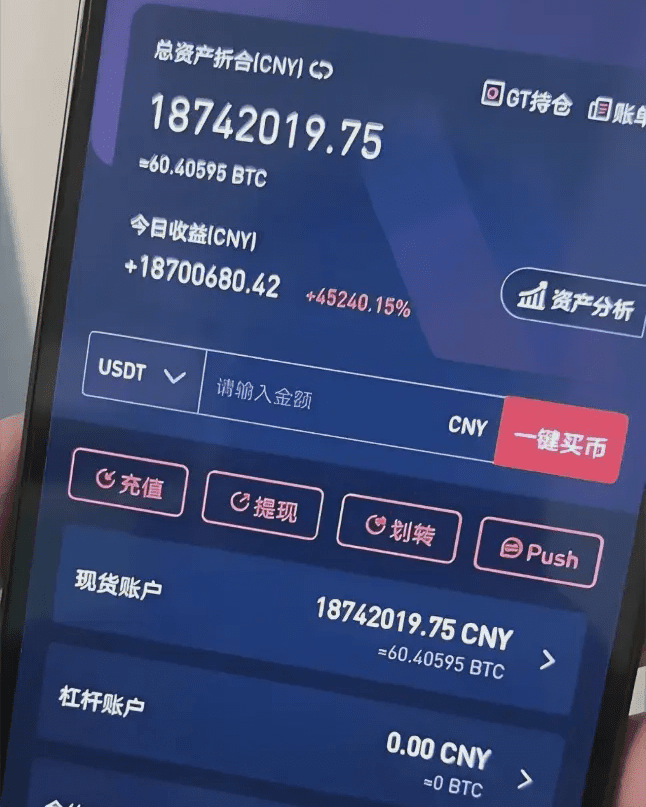
3 fierce strategies deconstructed: The contract secrets from being cut to wildly profiting, it’s not too late to learn now!
Many new friends just entering the cryptocurrency futures market often hear terms like 'liquidation', 'doubling', '10x leverage', 'long and short', and are confused. Today, I will explain in the simplest way how to make money in cryptocurrency futures.
The essence of cryptocurrency futures is a game of resisting market fluctuations with cognition and discipline.
1. The first coin: The underlying logic of directional betting
The essence of futures trading is flipping a coin: you determine whether the coin lands 'heads up' (long) or 'tails up' (short). Unlike a casino coin,
Leverage turns coins into dice: 10x leverage is equivalent to turning a coin into a 10-sided die. Guessing correctly amplifies returns by 10 times, and guessing wrong similarly amplifies losses. For example, using 1000 USDT as capital to go long on Bitcoin with 10x leverage, if the price rises from 30,000 to 31,000 (+3.3%), the return directly becomes 330 USDT (33%), but if the price drops by 3.3%, it will be liquidated.
Long and short profits: The traditional stock market can only make money when the coin lands 'heads up', while futures allow you to profit even when the coin lands 'tails up' (when the coin price declines). For example, if Bitcoin falls from 30,000 to 29,000, short sellers can still earn 330 USDT.
2. The second coin: Advanced plays of strategy combinations.
In addition to simply betting on direction, you can also construct an antifragile system through strategic combinations:
Grid trading: A cash machine in a volatile market.
Automatically buy low and sell high within a preset price range (e.g., Bitcoin at $90,000 - $110,000), buying every 5% drop and selling every 8% rise. This strategy could yield an average monthly return of 2,000-2,500 yuan with a capital of 100,000 yuan in the volatile market of 2025.
Funding fee arbitrage: Zero-risk profit.
When perpetual contract prices are higher than spot prices (e.g., Bitcoin premium 1%), buy spot while shorting contracts, earning funding fees paid by longs every 8 hours. In extreme cases, cross-exchange arbitrage can yield a daily return rate of up to 72%. For example, TRB has a funding rate of -3% on Binance and -1.66% on Bybit, earning a net profit of $120 every 8 hours with a $10,000 capital.
Hedging strategy: Make profits whether the market rises or falls.
Simultaneously opening long and short positions to hedge risks, locking in volatile profits. For example, when Bitcoin breaks through $100,000, buy spot and short contracts; regardless of subsequent price movements, profit can be made through price differences.
3. The third coin: The lifeline of risk control.
The essence of the risks of futures is the 'impact force when the coin lands', which requires three layers of protective nets to resist.
Position management: Don’t let coins crush your capital.
Master Tony's '1% Rule': Do not open a single position exceeding 1% of total capital. For example, with a capital of 50,000, keep each stop loss within 500 yuan. Even after 10 consecutive stop losses, you can still retain 90% of your capital.
'One-third principle': 1/3 of the funds for long-term, 1/3 for swing trading, and 1/3 for arbitrage, avoiding all-in to prevent liquidation.
Stop-loss discipline: Provide a buffer for coins.
Fixed percentage stop-loss: For example, if the price moves against you by 2% after opening a position, stop-loss to avoid further losses.
Wide stop-loss with small positions: Set a wider stop-loss range (e.g., 30 points), but control the position to within 1% to reduce the likelihood of being stopped out by market noise.
Emotional management: Don’t let coins become bombs.
'Three consecutive loss rule': After three consecutive stop losses, forcibly hold no positions for 24 hours to avoid emotional revenge trading.
'Profit harvesting mechanism': Withdraw 20% of profits to fiat wallets every 50% gain, to avoid turning unrealized profits into bubbles.
4. Practical case: Transformation from being a novice to a pro.
Case 1: Xiao Li's AI arbitrage journey
In 2025, Hong Kong programmer Xiao Li used Binance's smart grid to set up automated trading in the Bitcoin range of $90,000 - $110,000, buying every 5% drop and selling every 8% rise, combining it with funding fee arbitrage, achieving an average monthly profit of $12,000. His secret is:
Use AI robots to execute strategies to avoid human intervention.
Strictly follow the '4% fiat currency reserve' principle, keeping 4% of the capital to cope with extreme market conditions.
Case 2: He Mi's liquidation warning.
With a monthly salary of 3000 yuan, He Mi borrowed 600,000 yuan to fully invest in gold futures, reaching a position of 6 million yuan under 10x leverage. In April 2025, gold prices plummeted by 3.45% in one day, and his account was directly liquidated, resulting in a loss equivalent to 6 years of salary. His fatal mistake:
Borrowing to trade cryptocurrencies adds pressure, increasing debt interest along with leverage.
No stop-loss set, trying to 'hold the position' to recover losses
Five, three 'don'ts' that beginners must see.
Do not trade with living expenses: Keep at least 12 months of living expenses in fiat currency wallet to avoid impacting your life due to short-term volatility.
Don’t be superstitious about technical indicators: Tools like KDJ and MACD should be integrated with market sentiment and capital flow for comprehensive judgment; a single indicator has a winning rate of less than 40%.
The ultimate truth: Futures are a mirror of cognition.
Every penny you earn in the futures market is a realization of your market understanding; every penny you lose is a tuition fee for cognitive defects. The survivors from 300,000 to 34 million essentially transform market fluctuations into strategic dividends - while others are gambling in the casino, they are calculating probabilities with mathematical formulas, restricting human nature with discipline.
Final advice for beginners:
Practice on a simulated account for 3 months, recording the psychological changes of each trade.
Start real trading with a 1% position, seek survival first, then profit.
Pay attention to on-chain data like 'funding rate', 'open interest', and 'long-short ratio'; these are more real than K-lines.
Remember: Futures are not a gambling table, but a digital printing machine built with strategies and discipline. When you can calmly increase your positions during a crash and decisively take profits during a surge, futures will become your accelerator to financial freedom.

What should newcomers to the cryptocurrency market pay attention to?
If you plan to invest in the cryptocurrency market, please take a few minutes.
It originates from the pursuit of an unattainable dream of making a fortune in the cryptocurrency space.
I believe that if I really want to continue on the trading path, I must study diligently. In addition to understanding the fundamentals, analyzing news, and researching technical indicators should also be part of my studies.
If you don’t conduct in-depth research and reasonable planning for your money, your funds will eventually be depleted. In the end, as a rootless retail investor, you will only joyfully enter the market and leave in despair.
There is a reason why some famous technical indicators have endured over time. For example, the divergence signals of MACD, the overbought and oversold signals of KDJ, and the support and resistance signals, etc. While they cannot guarantee profits, they can enable a quantitative analysis on a relatively mature model, providing investors with a basic direction.
First, we need to know under what circumstances rolling positions are suitable:
Currently, only the following three situations are suitable for rolling positions:
1► Choosing a direction after a long-term sideways volatility at a new low.
2► Bottom-fishing after a significant decline in a bull market.
3► Breakthrough of major resistance/support at the weekly level
Overall, there are only these three situations where the odds are relatively high; all other opportunities should be abandoned.
Still the same saying, bulls have their strategies, bears have their methods.
Will not lead fans to liquidation, and will not blindly open positions.
Nine key points to make money in cryptocurrency trading.
Let me summarize my insights on achieving financial freedom over the past decade: 9 key points to make money in the cryptocurrency market.
1. Don’t rely on luck. If your winning trades outnumber your losing ones, and the account is gradually increasing, it indicates your method is correct. But if you win nine times and lose one heavily, you need to be cautious. Don’t go all in casually; if you’re wrong, stop-loss promptly and adjust your strategy.
2. Trust your judgment. Sometimes you may be right initially, but changing your mind after hearing others can lead to losses. Investing requires your own opinions; often, the ones who make money in the market are the few.
3. Learn to see trends. The cryptocurrency market has both rises and falls. Following the trend makes it easier to make money, while going against it carries significant risks. Learn more technical analysis to improve your market judgment.
4. Control risk. The cryptocurrency market is highly volatile; do not go all-in. Start with small positions to test the waters; if the trend is correct, then increase your position. Set stop-losses for every trade; don’t be greedy or hesitate.
5. Be patient and wait for opportunities. Don’t rush to buy just because the price has risen; find a good position before entering. Better to miss out than to make a mistake.
6. Leave when it's time. Take profits at your target, don't think about making more, or you may end up losing. Even if you incur losses, decisively stop-loss; don't fantasize about recovering losses, preserving capital is essential to continue playing.
7. Maintain a good mindset. Investing is not a one-day affair; it’s normal to have both gains and losses. Regardless of whether you are currently making or losing money, stay calm, summarize your experiences, and over the long term, you’ll achieve stable profits.
8. Pay attention to news + technology: Sometimes a major news event can cause significant market changes, so you cannot just look at technicals, but also keep an eye on market dynamics.
9. Invest only with spare money.
Borrowing to trade cryptocurrencies is stressful and prone to erratic decisions. It’s best to use money that doesn’t affect your life; this way, your mindset is stable, and your operations are more flexible.
In life, you must experience ups and downs to gain profound insights! As long as you don’t give up, the more you try, the closer you get to success. What’s truly great in life isn’t doing something once but dedicating your life to one thing.
I am Sunny Day. Although I haven't accompanied you to see the stars and the sea or the summer sunset, I can take you to the shores of success. Friends who like me can follow me; thank you for your likes, and let's move forward together!
