
It sounds like a logic puzzle. But in the world of blockchain, this is the core principle behind zk-SNARKs, the cryptographic technology used in Midnight.
The idea behind this technology is surprisingly simple, even though the mathematics behind it is extremely complex. Instead of revealing all the data behind a statement, a system can generate a mathematical proof that the statement is correct. Anyone can verify the proof and be confident that the claim is valid, yet they never gain access to the original data.
This concept comes from a field of cryptography known as Zero-Knowledge Proof. The principle is straightforward: one party can prove that they know a piece of information or that a condition is satisfied without revealing the information itself. zk-SNARKs are a specialized implementation of this idea, designed to work efficiently in decentralized systems such as blockchains.

Traditional verification systems usually require the underlying data to be exposed. If a bank needs to confirm that you have enough funds to complete a transaction, it typically needs to check your account balance directly. If a medical institution needs to verify whether a patient qualifies for a clinical study, it usually requires access to the patient’s health records. In both cases, verification depends on sharing sensitive information.
zk-SNARKs change this rule entirely.
Instead of revealing the data, the system produces a small cryptographic proof that confirms whether a statement is true. The verifier only checks the proof. If the proof is valid, the statement must be correct, even though the verifier never sees the data that produced it.
To understand how powerful this idea can be, imagine a simple financial scenario. Suppose you want to complete a payment, and the network needs to confirm that your balance is larger than the amount being sent. In a typical system, the network would have to read your actual balance. But with zk-SNARKs, you can simply prove that your balance is greater than the required amount. The network can verify that this statement is true without ever learning the exact number in your account.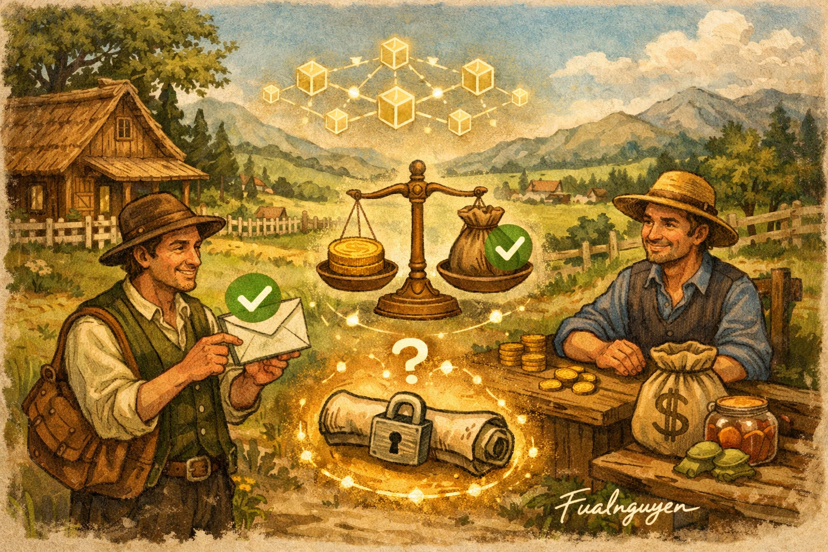
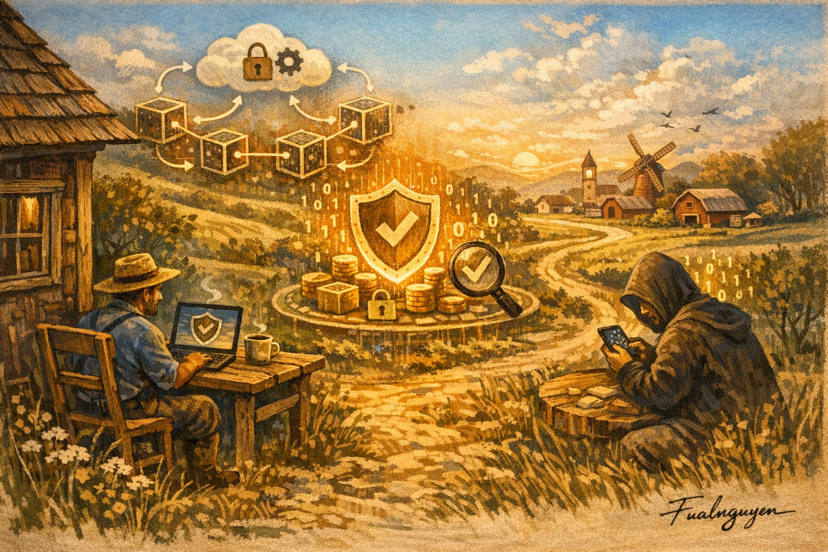
The same principle can apply to healthcare data. A patient could prove that they meet the eligibility requirements for a clinical trial without revealing their full medical history. The system verifies the condition while the sensitive information remains private.
This approach is particularly important as blockchain technology moves beyond simple financial transactions and begins interacting with real-world industries. When dealing with financial records, medical data, or personal identity, privacy becomes just as important as transparency.
One of the key advantages of zk-SNARKs is the extremely small size of the proofs they produce. Even if the underlying computation is complex, the resulting proof can remain very compact, often only a few hundred bytes. This makes it practical to store and transmit proofs on a blockchain without significantly increasing network load.
Verification is also extremely fast. Nodes in the network can validate a proof in just a few milliseconds. In decentralized systems where thousands of transactions may need to be validated continuously, this efficiency becomes critical. Slow verification would quickly create bottlenecks across the entire network.
Another important characteristic is that the heavy computation can happen off-chain. Users can process sensitive data locally on their own devices and then submit only the proof to the blockchain. The network does not receive the private data itself. It simply verifies that the required conditions have been satisfied.
This means sensitive information never needs to leave the user’s device.
For blockchain systems that aim to handle confidential data, this architecture is extremely valuable. It allows decentralized networks to enforce rules and verify transactions while preserving privacy at the same time.
This is precisely the direction taken by Midnight. The project focuses on enabling blockchain applications that can work with regulated or sensitive information without exposing that information publicly on the ledger.
Instead of forcing every piece of data onto a transparent blockchain, Midnight allows computations to remain private while still producing verifiable outcomes. Transactions and processes can still be validated by the network, but the underlying data remains hidden.
This approach becomes increasingly important as blockchain technology begins interacting with industries that operate under strict data protection rules. Regulations such as GDPR in Europe and HIPAA in the United States require organizations to protect personal and sensitive information carefully.
In the past, these regulations created a major challenge for blockchain adoption. Public ledgers are designed for transparency, while many industries require confidentiality. At first glance, these requirements seem incompatible.
Technologies like zk-SNARKs offer a possible bridge between these two worlds.
Instead of forcing systems to choose between transparency and privacy, cryptographic proofs allow networks to verify compliance without exposing the underlying data. A system can prove that a rule was followed without revealing the information used to satisfy that rule.
If this model continues to evolve, it could reshape how digital systems manage trust.
For decades, most online services have operated under a simple assumption: if you want verification, you must provide your data. Identity checks, financial confirmations, and access permissions all rely on revealing information to centralized systems.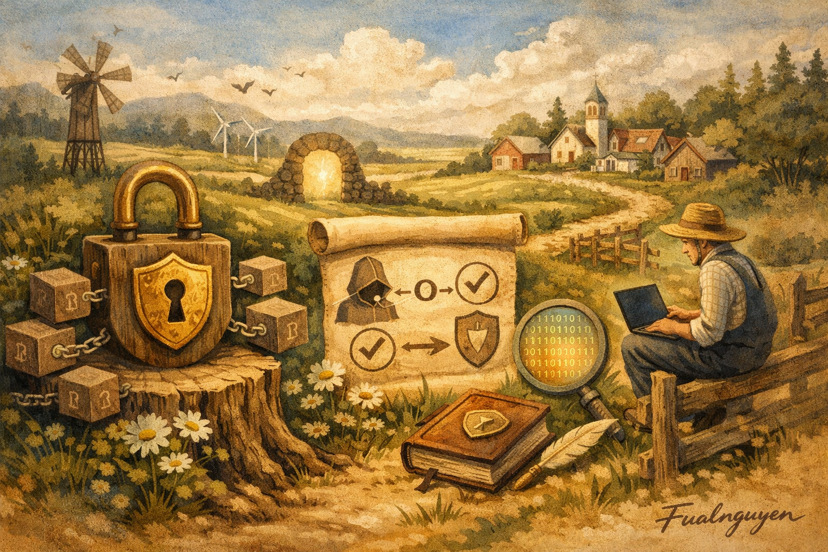
Zero-knowledge technologies challenge that assumption.
They allow systems to verify facts while minimizing the amount of information that must be shared. Trust no longer comes from exposing data, but from verifying mathematical proofs.
In this sense, zk-SNARKs represent more than just a cryptographic tool. They represent a new way of thinking about digital trust.
And as privacy becomes an increasingly central issue in the digital economy, technologies like zk-SNARKs may play a crucial role in shaping the next generation of blockchain infrastructure.