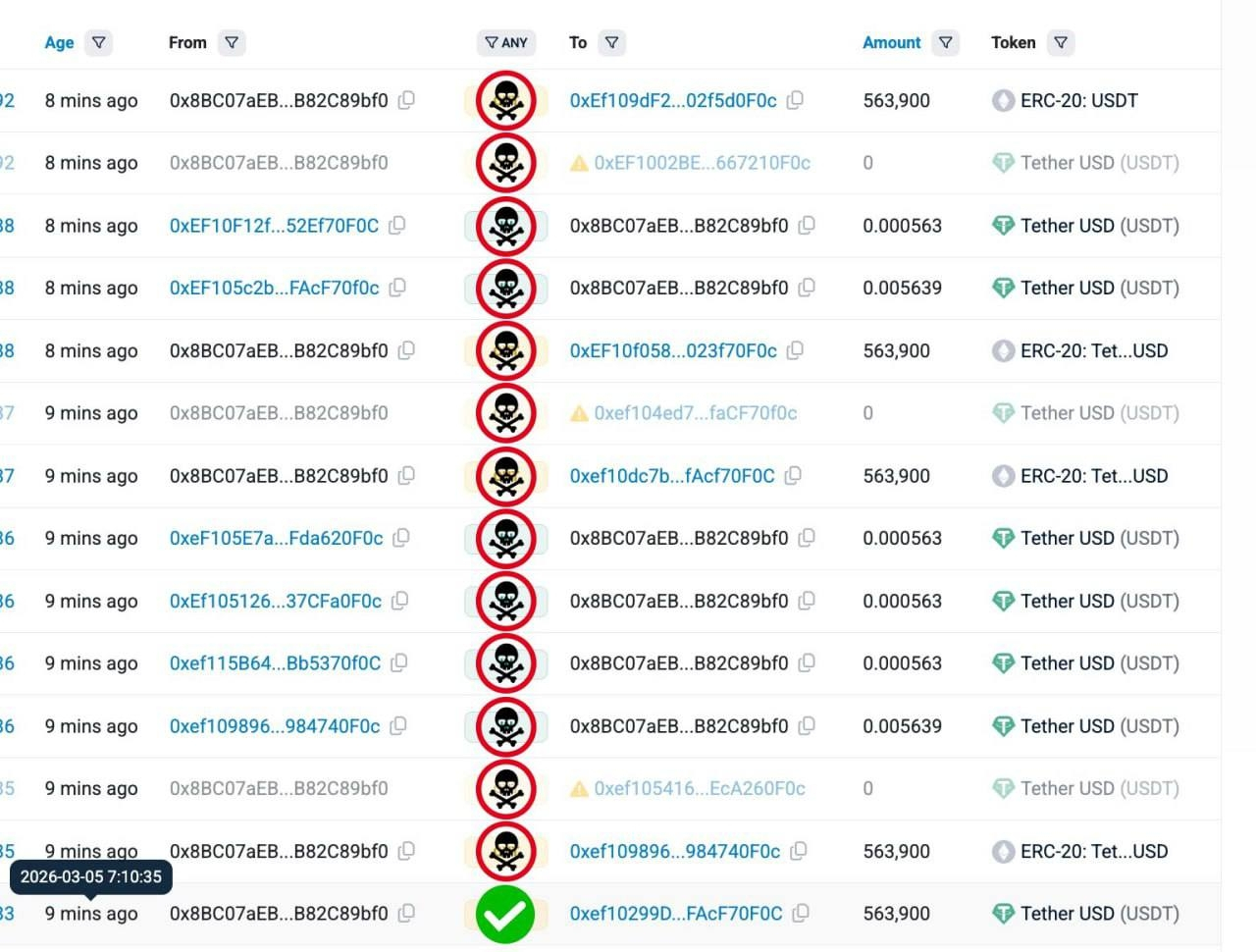
Ethereum has become a primary network for scammers
After the Fusaka upgrade on December 3 and the reduction in fees, the number of microtransactions in USDT surged by 612%, with most of them reportedly linked to scams.
Fraudsters use “address lookalikes” — wallets that resemble addresses the victim has interacted with before — sending minimal or zero-value transfers to appear in the victim’s recent transaction history.
When making a new transfer, the user sees familiar characters at the beginning of the address, copies it, and unknowingly sends funds to the scammer’s wallet.
❗️Always double-check the address before sending any funds.