

I’m always a little skeptical when a new crypto project claims it’s about to fix privacy. We have heard that pitch before. But every now and then something pops up that’s at least worth a closer look. Lately for me, that project has been Midnight Network.
The privacy problem in crypto has always felt awkward. Public blockchains are brutally transparent. Every transaction, every wallet interaction, every strategy all visible forever. Great for auditability. Terrible if you’re a company, a trader with size, or basically anyone who values a bit of financial privacy.
@MidnightNetwork is trying to thread that needle.
The project comes out of Input Output Global, the same engineering group behind Cardano. Instead of building another general-purpose chain, Midnight is being positioned as a partner network focused specifically on confidential smart contracts and protected data.
But here’s where it gets interesting.
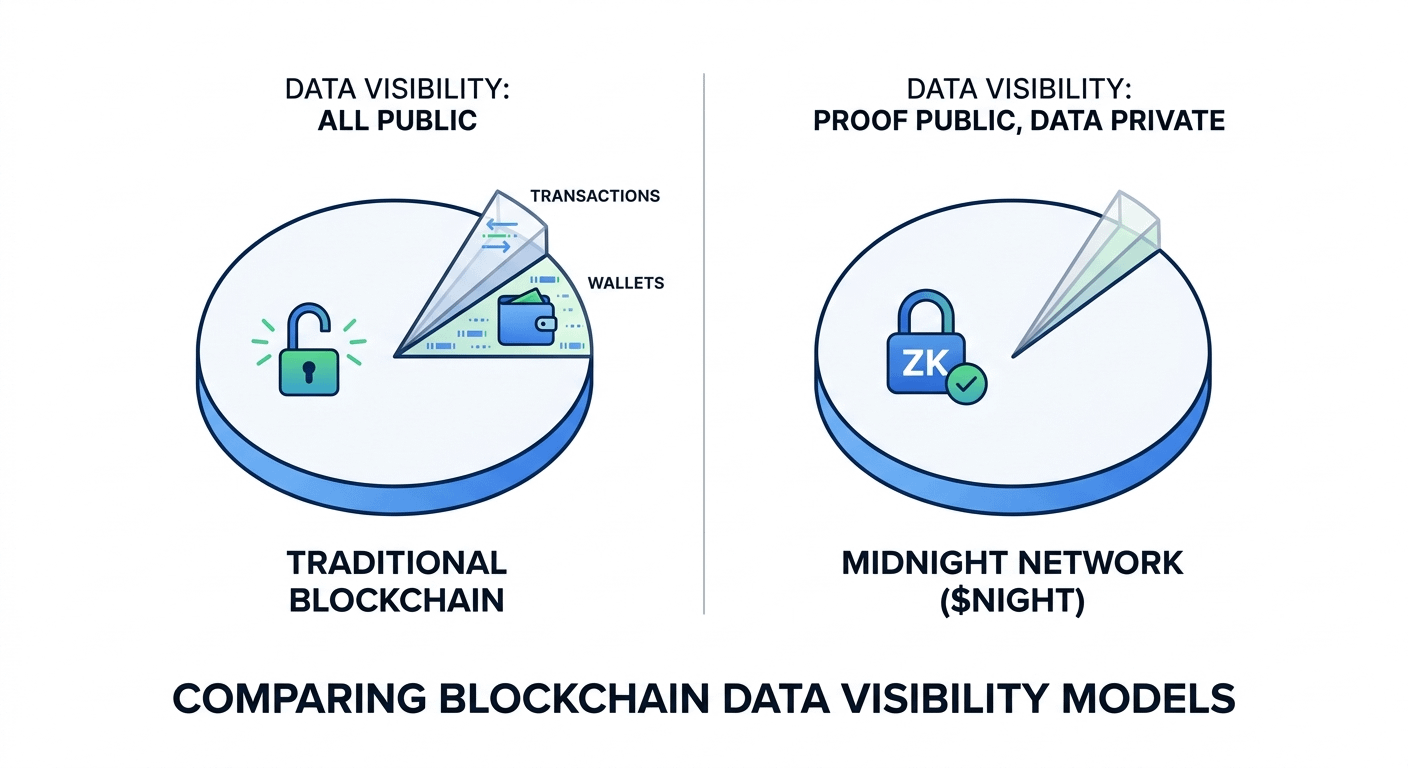
The backbone of the system is zero-knowledge cryptography. ZK proofs have been getting a lot of attention lately, and for good reason. A way I like to think about them is like a locked safe with a glass window. You can watch the safe shake and hear the mechanisms click, and at the end the system proves the puzzle inside was solved correctly but nobody ever opens the safe to reveal what was actually inside.
That’s the trick.
You get proof without exposure.
And honestly, that’s something crypto desperately needs if it ever wants serious real-world adoption.
Because imagine a company running its finances on Ethereum today. Every payment visible. Every strategy exposed. Every salary trackable. It’s basically corporate surveillance.
Midnight’s pitch is simple keep the verification, hide the sensitive data.
But the real twist isn’t just the tech. It’s the philosophy they’re pushing, something they call Rational Privacy.
And that phrase feels deliberate.
Most privacy coins in the past went all-in on anonymity. Monero, Zcash, others. Incredible cryptography. But markets and regulators treated them like a problem waiting to happen. Exchanges started delisting them. Liquidity shrank.
Hot take those projects didn’t fail technically they failed politically.
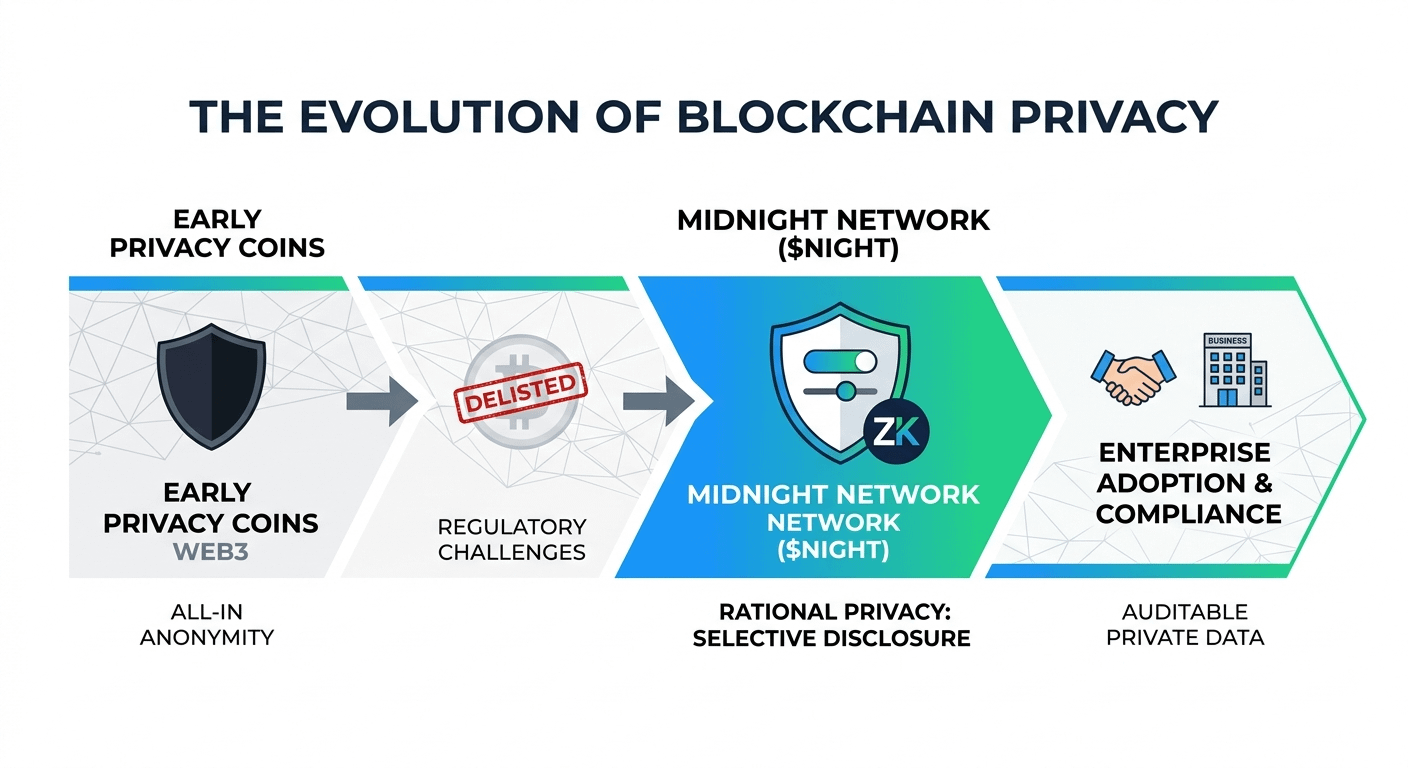
Midnight seems to be taking a different route.
Instead of absolute secrecy, the system allows selective disclosure. Data stays private by default, but it can be revealed when necessary for audits, compliance checks, identity verification, whatever the situation demands.
Privacy when you want it. Transparency when you need it.
Smart idea? Probably.
Risky idea? Also probably.
Because once disclosure mechanisms exist, the big question becomes who controls them.
And if you’re reading this on a blog or Substack, imagine a quick meme right here something like a two-panel chart
Traditional Blockchain:
Everything public.
Midnight
Proof public. Data private.
Sometimes a visual explains it better than a whitepaper ever could.
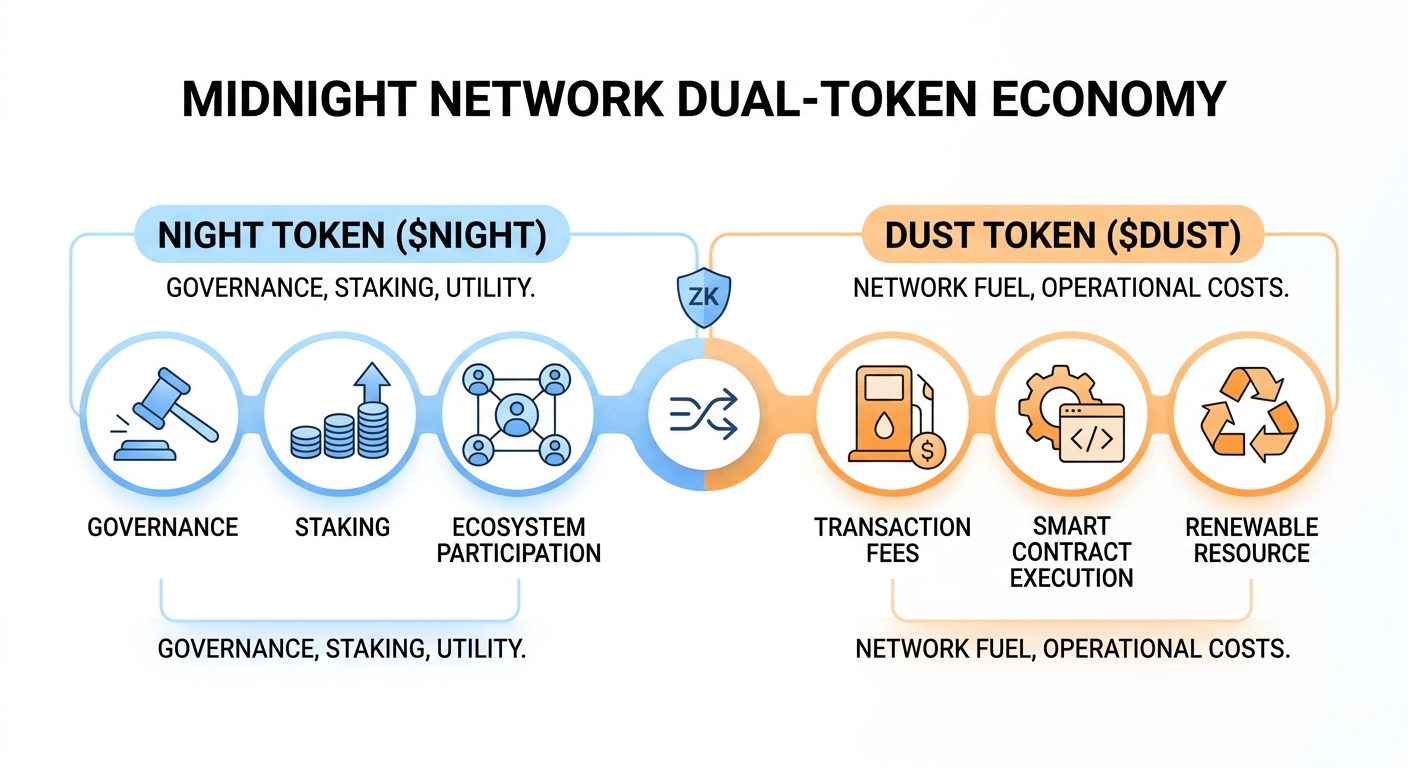
Another interesting design choice is the token structure. Midnight splits the network economy into two pieces. NIGHT acts as the main asset tied to governance, staking, and ecosystem participation. Meanwhile DUST functions more like a renewable resource that powers transactions and smart contracts.
Separating network fuel from economic value is actually a pretty clever experiment. Ethereum’s gas system works, but fee volatility has always been painful.
Midnight is basically asking what if transaction costs didn’t have to be tied to speculative token price?
Whether that works in practice we all see.
There’s also the developer angle. The team introduced a smart contract language called Compact, designed specifically for building privacy-preserving applications. If adoption actually happens, you could see things like confidential DeFi, protected identity systems, or enterprise workflows that stay private while still benefiting from blockchain verification.
That’s the theory.
The ecosystem push also included something pretty bold: the Glacier Drop distribution. Instead of focusing on a single chain community, the project targeted wallets across multiple networks Bitcoin, Ethereum, Solana, Cardano and others.
Basically casting a massive net across Web3.
It’s a smart growth strategy. But distribution doesn’t equal adoption.
Because the truth about privacy infrastructure is this everyone says it’s important until they actually have to build with it.
Still, the direction Midnight is exploring feels important. Crypto started with the idea of financial sovereignty, but somewhere along the way we accepted radical transparency as the default. That works for open finance. It doesn’t work for most real-world systems.
So maybe the future isn’t fully transparent chains or fully anonymous ones.
Maybe it’s something in between.
Which brings me to the question I keep thinking about.
If Midnight’s idea of rational privacy actually works does that push crypto closer to mainstream adoption?
Or does it slowly blur the line between decentralized finance and the regulated systems it originally tried to replace?
