

The pager buzzed at 02:07 like something that had learned how to be politely insistent. It was a short line: node version changed. No alarms, no flashing red banners—just a small shift in the system’s permissions map. We all know that kind of message; it reads calm but it carries consequence. Someone opens the logs, someone diffs the upgrade, someone looks at the wallet-approval hooks and says the quiet sentence that starts the whole thing: who signed off on this? A member of the risk committee joins the call with the same steady voice they use for routine escalations. The voice is not performative. It wants facts.
When I say this in human terms, what I mean is: the most important moments are full of small decisions. Did a developer authorize a migration that broadened a key’s scope? Did a product owner accept a short-lived session for convenience without tightening its expiry? These micro-choices are the texture of governance. They’re not exciting. They are necessary, and when they fail they feel mundane because they were avoidable.
We talk about TPS the way cooks talk about heat: without acknowledging that knife work is what kills. Throughput gets dashboards, awards, and press mentions. But the real, late-night emergencies come from permissions and key exposure. A hot key in the wrong multisig path can do more damage than any slow block ever could. That’s not a theory; it's the repeated scene in post-mortems where the ledger’s speed was irrelevant and the approval model was the proximate cause.
The system we’re describing is deliberately built to treat speed as capability, not destiny. Underneath sits a conservative settlement layer that insists on being explainable and recheckable. Above it runs an SVM-based, high-performance execution environment that lets teams move fast and test ideas. Modular execution sits on top of that conservative base: it gives you room to experiment while keeping finality accountable. That architectural split matters because it preserves a place to ask questions after something happens, instead of forcing us to invent answers when the money is already gone.
Governance shows up in paper and in posture: audits, risk committees, and the endless wallet approval debates that sound like bureaucracy but are actually a form of discipline. Audits capture a moment in time; they tell you what was configured yesterday. Audits are critical, but they are only one tool. Runtime constraints are another. That is why Fabric Sessions exist as enforced, time-bound, scope-bound delegation constructs—because we needed a way to make temporary authority both visible and self-expiring. Sessions make the delegation surface area finite. They make the conversation about risk practical.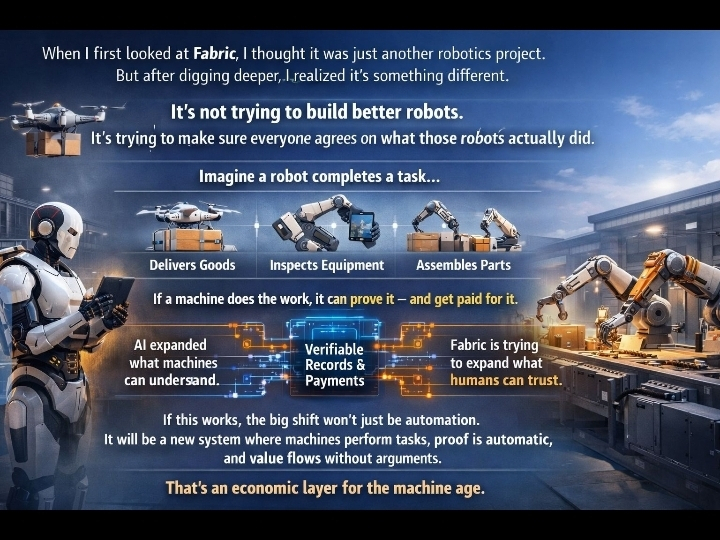
“Scoped delegation + fewer signatures is the next wave of on-chain UX.” Say it plainly: fewer signatures that are tightly scoped reduce the accidental blast radius. They make the right thing the easy thing. They make audit trails readable. They spare a sleepy on-call engineer from having to invent a justification for some permissive approval path at three a.m.
We also have to be honest about incentives. The native token is security fuel, and staking as responsibility. Those phrases are not marketing metaphors; they are accountability mechanics. When stake confers weight, that weight is a public ledger of who benefits and who can be asked to answer when things go wrong. It changes the social context of technical choices.
Bridges are where convenience and fragile trust intersect. We accept bridge risk because users want liquidity and composability, but we cannot pretend that failures are gentle. “Trust doesn’t degrade politely—it snaps.” When a peg tears, the immediate questions are granular and unforgiving: which keys signed, which session allowed the transfer, who permitted that hot path? The snapping isn’t cinematic; it’s procedural and messy, and the people who have to respond are the ones who argued for the extra signature and the ones who argued it was slow.
EVM compatibility appears in this stack as a practical concession: EVM compatibility only as tooling friction reduction. It lets existing developer ecosystems breathe on a new ledger without demanding a full rewrite of thinking about permissions. But compatibility should never be a cover for importing sloppy permission models. Bringing tooling along is not the same as outsourcing governance.
In the quiet after an incident, post-mortems are where the human side is most visible. The logs tell one story; the memo tells another. Did someone write plainly about the error and the decision that caused it? Did the risk committee change the defaults? Did the engineers shorten session lifetimes? Those small, human follow-ups matter as much as the code changes. They’re the social infrastructure that keeps the technical infrastructure honest.
We build fast ledgers because speed buys us time and breathing room. But the point of speed should be to empower refusal when necessary, not to make refusal harder. A system that can execute at high velocity and still say no—by revoking sessions, by enforcing narrow delegation, by requiring renewed consent for unusual flows—is one that prevents the types of predictable failure we see in those 2 a.m. calls.
At dawn the notes are brief and clear. The misconfiguration is reverted. Session defaults are tightened. Someone updates the playbook. A ledger that can move quickly and still decline a dangerous request is not a paradox; it’s a discipline. A fast ledger that can say “no” prevents predictable failure.$ROBO #ROBO @Fabric Foundation
