been thinking about infrastructure timing cycles for 3 days straight and honestly? this is the one framework that determines everything about ROBO's outcome 😂
what bugs me:
beautiful whitepaper. real tech. actual hardware partners.
but coordnation layer for robots only works if robots exist at scale.
how many general-purpose robots operating commercially right now?
thousands globaly. not millions. not even close to millions.
Fabric is building highways before cars were invented.
that's either visionary or catastrophic. history gives us exactly two comparable examples.
the timing angle nobody discusses:
AWS launched 2006. cloud computing demand = theoretical at launch.
enterprises said "why not just run our own servers?"
within 24 months = cloud demand exploded. AWS = right place, right time.
VR headsets launched 2016. immersive computing demand = theoretical at launch.
developers said "spatial computing changes everything."
2026 = mass VR adoption still hasn't arrived. Meta lost $40B+ chasing it.
ROBO 2026 = robot coordination demand = theoretical at launch.
question isn't whether robot economy arrives. question is when.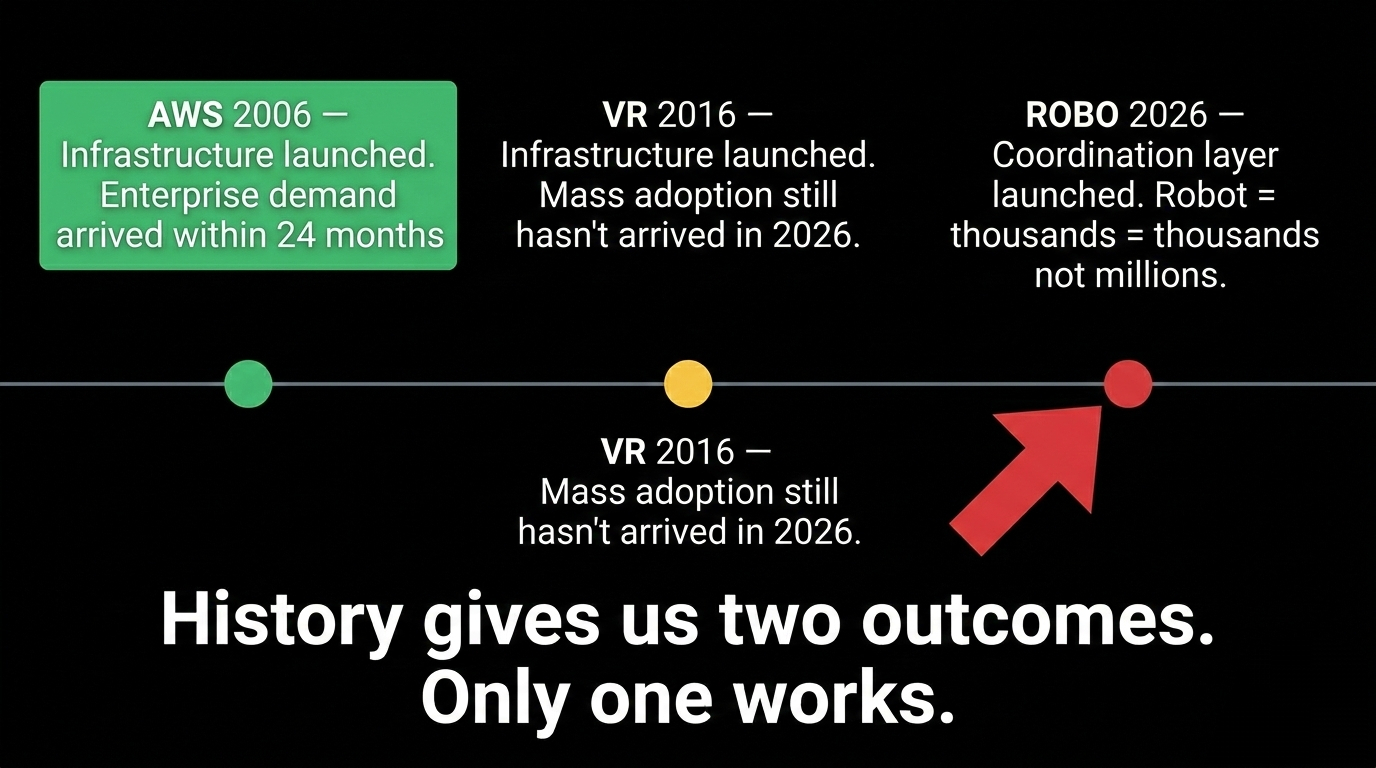
my concern though:
$391M FDV prices in robot economy arriving fast.
insider cliff expires February 2027. 12 months from now.
if robot economy scales slower than 12 months = insiders exit into market without demand.
AWS had enterprise cloud contracts within 12 months of launch.
VR had enthusiast hardware sales but zero enterprise adoption at month 12.
ROBO needs: actual robot operators staking $ROBO, real machine-to-machine payments, verifiable Proof of Robotic Work transactions.
none of these exist yet at meaningful scale.
12 months is extremely tight for robot economy to develop real organic demand.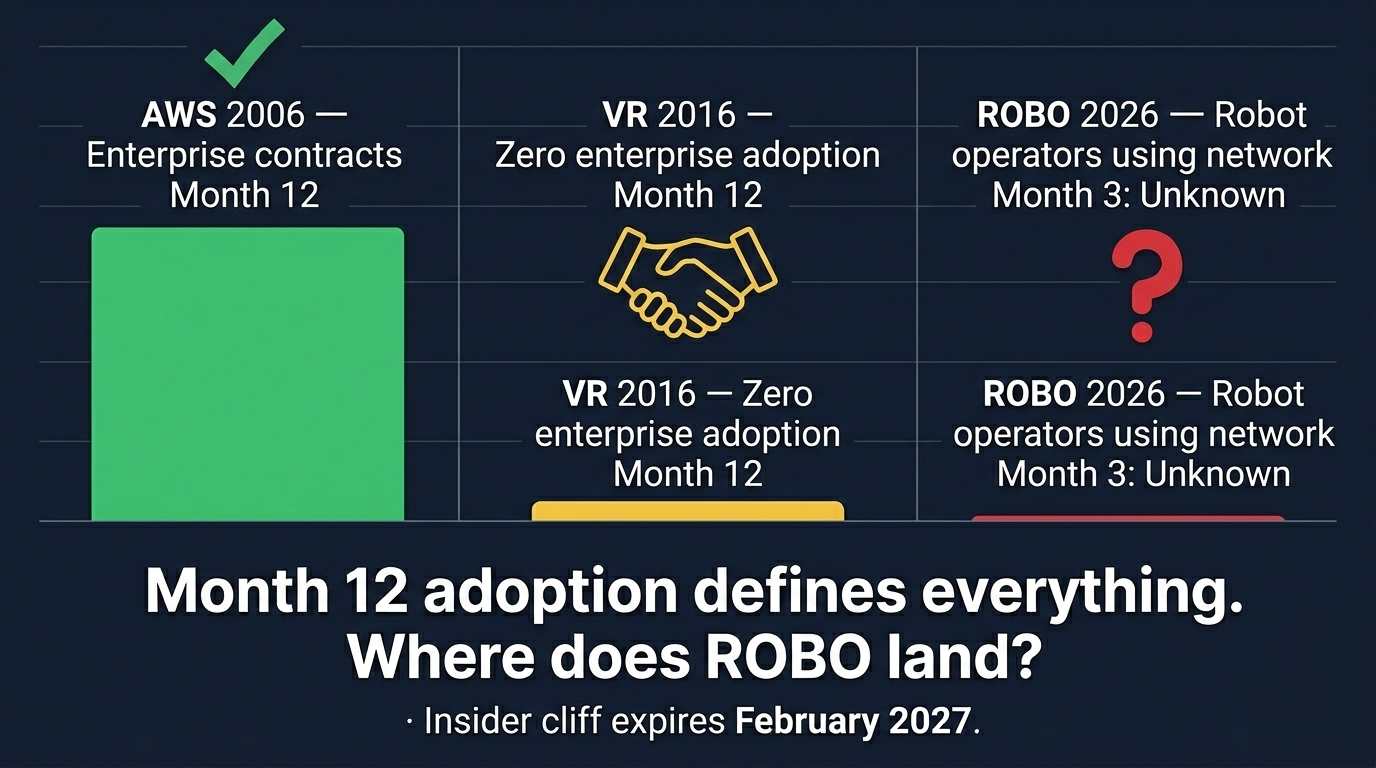
what they get right:
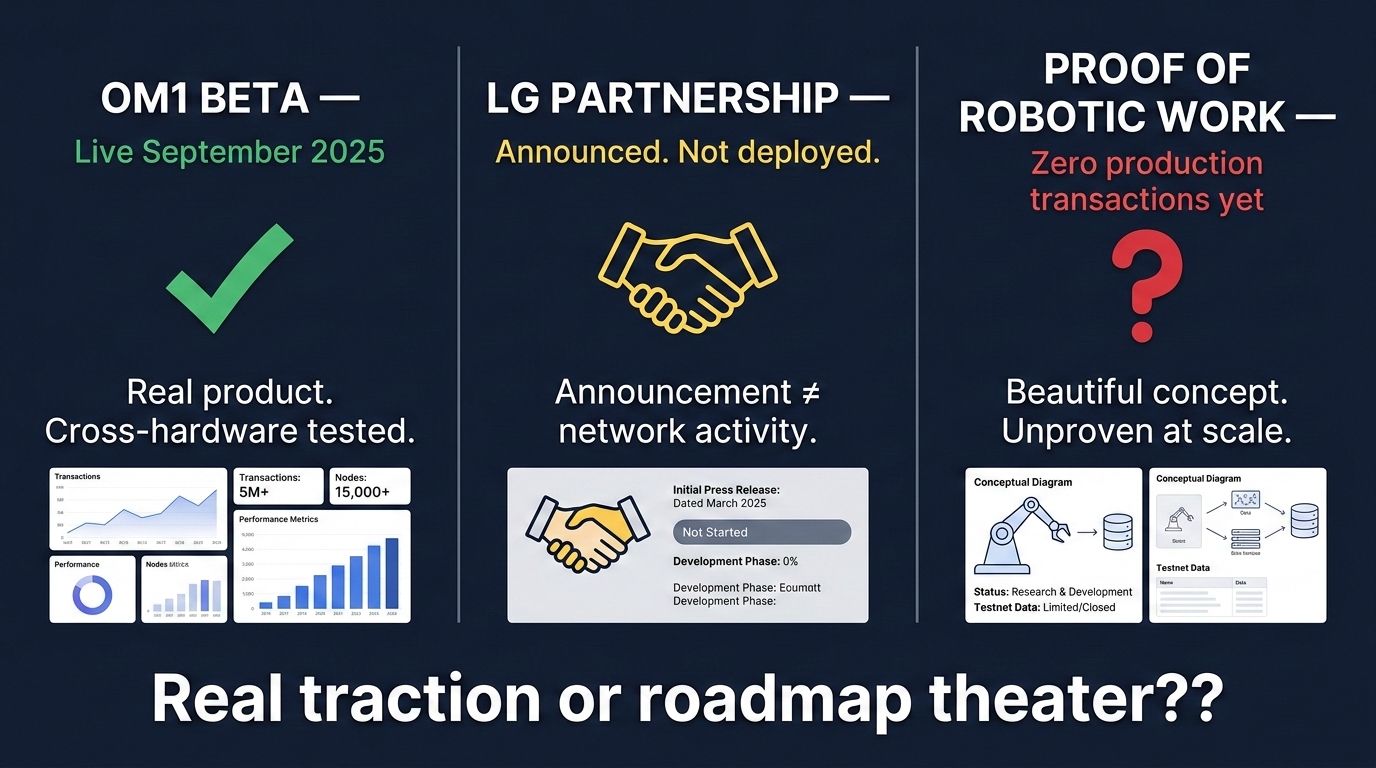
OpenMind OM1 genuinely cross-hardware. tested on Unitree, LG Electronics, multiple form factors. not vaporware. beta live September 2025.
ERC-7777 and ERC-8004 standards work = interoperability layer being built now. standards take time. starting early = correct strategy.
Proof of Robotic Work = novel mechanism. robots earn by completing verifiable physical tasks. if scale arrives this becomes critical infrastructure automatically.
Base deployment = micropayment architecture correct. robots paying fractions of cents to each other = needs sub-cent fees. Ethereum mainnet impossible. Base solves this elegantly.
non-profit foundation structure = no shareholder pressure for quick returns. can build for decade timeline if funding holds. important advantage over VC-backed competitors.
what worries me:
LG Electronics partnership = announced. not deployed.
Unitree = hardware maker, not operator. selling robots ≠ robots using ROBO network.
partnership announcements ≠ network activity.
zero evidence yet of actual robots posting bonds, completing tasks, earning ROBO.
Proof of Robotic Work = beautiful concept. unproven in production.
honestly dont know if robot hardware scaling happens fast enough to validate $391M FDV before February 2027 insider cliff creates distribution pressure into thin market.
watching: (1) any verifiable on-chain robot task completions, (2) OM1 deployment announcements beyond beta, (3) actual operator count not just holder count.
what's your take — robot economy reaches meaningful scale before February 2027 or ROBO becomes VR 2016?? 🤔