There is a moment in every technology cycle when the spotlight shifts from visible applications to the systems that make them possible. In blockchain, that moment keeps returning to infrastructure. The networks that survive are not the loudest, but the ones that execute reliably under pressure. Fogo is a high performance Layer 1 built on the Solana Virtual Machine, and its design reflects a simple belief: sustainable adoption depends on how well the base layer performs when demand is real.
At the center of Fogo’s architecture is SVM based execution. The Solana Virtual Machine was designed to process transactions in parallel rather than one by one. Traditional blockchains often move sequentially, validating each action in order. That works at low scale, but it creates bottlenecks as activity grows. SVM takes a different path. It analyzes which transactions can run at the same time without conflicting with each other. When there is no overlap in the state they touch, they execute simultaneously. The result is parallel processing that increases throughput without sacrificing clarity in state transitions.
This matters because speed alone is not the goal. What matters is low latency and predictable confirmation times. On Fogo, transactions do not wait unnecessarily in line behind unrelated operations. The system is built to reduce idle capacity and make full use of available resources. For traders running on chain order books, this means orders are matched and settled quickly. In high frequency trading environments, a few milliseconds can change outcomes. A network that processes instructions in parallel and confirms them with consistency becomes more than infrastructure. It becomes part of the trading strategy itself.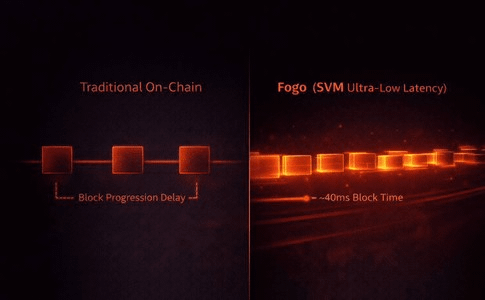
Real time liquidity routing also depends on this structure. When decentralized exchanges, lending protocols, and derivatives platforms operate simultaneously, liquidity needs to move quickly across pools. Delays can create price gaps or missed arbitrage opportunities. High throughput combined with low congestion allows smart contracts to react to market conditions in near real time. Settlement in DeFi is not just about recording balances. It is about clearing positions, updating collateral ratios, and preventing cascading failures during volatile periods. Fogo’s architecture is designed to keep these processes stable even when activity surges.
Reliability under heavy demand is often underestimated. Networks may perform well in quiet periods, but markets are rarely quiet when it matters most. During sudden spikes in volume, infrastructure is tested. Fogo’s use of SVM enables consistent execution because parallel processing prevents unrelated workloads from blocking each other. The system is built to maintain predictable performance characteristics rather than degrade sharply under stress. This consistency builds trust among developers who need assurance that their applications will behave the same way during peak usage as they do in testing environments.
The same principles extend to AI integrated decentralized applications. As more dApps incorporate machine learning models and real time analytics, the need for immediate data processing becomes more visible. Smart contracts that rely on live data feeds, adaptive pricing, or automated portfolio adjustments must react quickly. If the base layer is congested, these responses are delayed, and the intelligence embedded in the application loses value. On a high performance Layer 1 like Fogo, low latency and steady throughput allow AI driven contracts to execute decisions without being trapped in network backlog. The chain becomes a responsive environment rather than a constraint.
GameFi presents a different but equally demanding challenge. Games require rapid state updates. Player actions, asset transfers, rewards, and interactions must register instantly to maintain immersion. If confirmations are slow or inconsistent, the experience feels broken. Fogo’s parallel execution model supports frequent state changes without forcing players to compete for block space in a way that disrupts gameplay. Asset transfers remain smooth even when many users are active at once. Peak load stability is not optional in gaming environments. It is fundamental to user retention.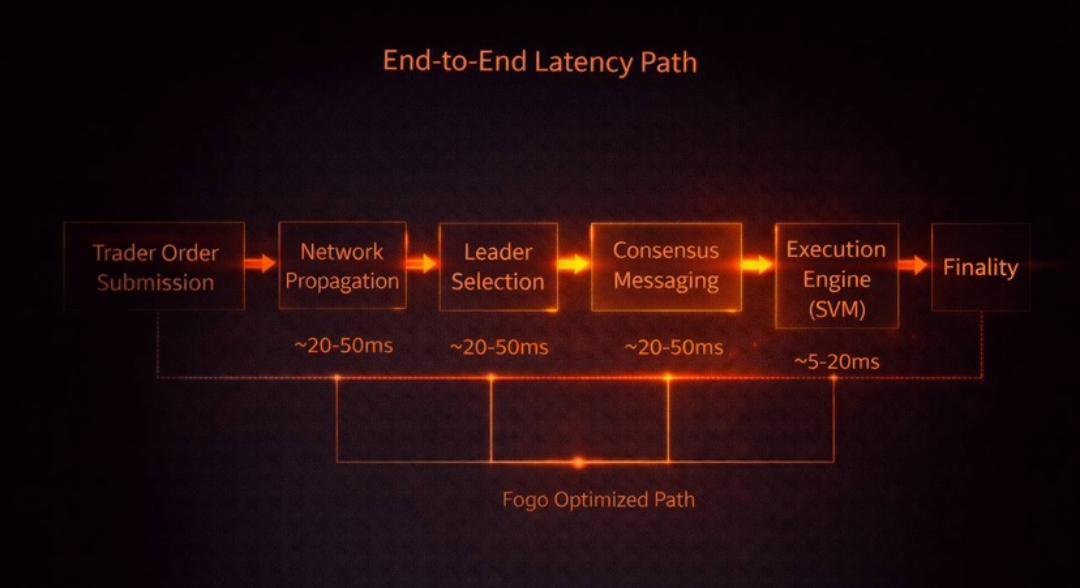
There is also a broader question of economic design. A Layer 1 that delivers predictable execution allows developers to model costs more accurately. When transaction fees and confirmation times are stable, businesses can plan. They can design on chain order books, payment systems, or microtransaction models with confidence that performance will not collapse unexpectedly. In this way, infrastructure shapes behavior. It influences which applications are viable and which remain theoretical.
Fogo does not position itself as an experiment. It presents itself as infrastructure first. By building on the Solana Virtual Machine, it adopts a proven execution environment while focusing on optimization and reliability. References to @Fogo Official and the token $FOGO often center on ecosystem growth, but the underlying story is less about branding and more about architecture. If the base layer is engineered for parallelism, low latency, and sustained throughput, everything built above it inherits those properties.
In the end, adoption is rarely decided by marketing or temporary incentives. It is decided by whether applications continue to function smoothly as user numbers increase and transaction volume rises. Infrastructure does not usually draw attention, yet it determines whether innovation can persist. Fogo’s approach reflects an understanding that scalability is not a feature added later. It is a foundation laid at the beginning. The infrastructure layer quietly shapes every interaction, every trade, every in game action, and every automated decision. If it holds firm, the ecosystem above it can grow without fear. If it falters, everything above it slows down. That quiet reality is why infrastructure is the deciding layer for sustainable blockchain adoption.