
Most people meet crypto at the surface level. They see tokens, apps, yields, trading screens, and the endless race to launch something new. But sustainable adoption is usually decided in a quieter place, underneath all of that, where the chain either behaves like dependable infrastructure or like a crowded experiment. That is why Fogo matters as an idea before it even matters as a brand. Fogo is a high performance Layer 1 built on the Solana Virtual Machine, and it is built around a simple thesis that tends to get proven the hard way: the infrastructure layer is what determines whether everything above it feels real, feels fast, and feels safe enough to keep using when demand spikes.
The Solana Virtual Machine has a specific advantage that shows up most clearly when the system is under stress. SVM style execution is designed for parallel processing. Instead of forcing every transaction to wait behind unrelated transactions, it can run multiple transactions at the same time when they are not touching the same pieces of state. That sounds like a technical detail, but it changes the day to day experience of using a chain. Parallel execution is what turns raw hardware into real throughput. It is what keeps one busy application from becoming everyone else’s problem. It is also what makes low latency possible in practice, not just in a benchmark. When a chain can confirm transactions quickly and keep confirmations consistent, users stop thinking about the chain and start focusing on the action they came to do.
Low latency and high throughput are not vanity metrics when you move past simple token transfers. They are survival requirements for on-chain order books and any market structure that tries to behave like a modern exchange. An order book is not a slow story. It is a constant stream of updates, cancellations, fills, partial fills, and repricing. If the chain lags, the book becomes stale. If execution becomes unpredictable, spreads widen and liquidity gets cautious. That is why high-frequency trading and real-time liquidity routing have such a direct relationship with infrastructure quality. Traders and liquidity providers do not just want speed. They want the kind of speed that is boring. They want the same execution profile at 2 pm and at the peak of a news event. They want to know that a transaction will not suddenly take ten times longer because the network is crowded, and they want the cost of getting a transaction included to remain stable enough to plan around.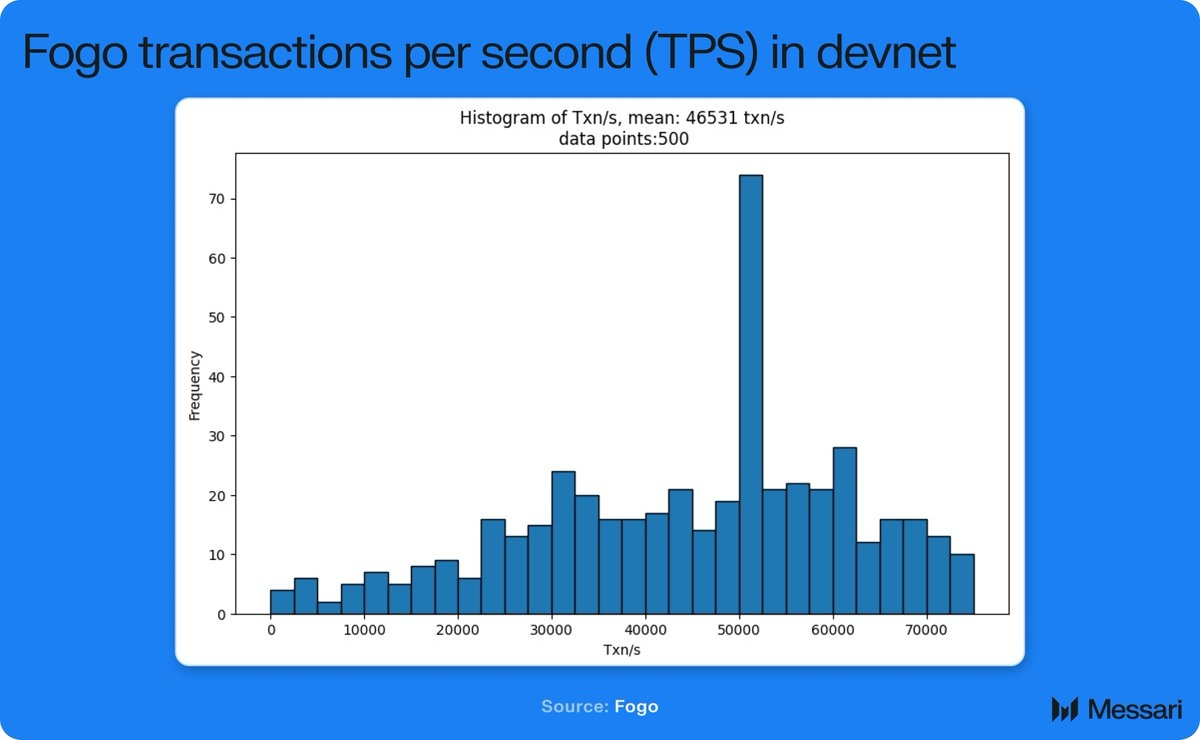
This is where SVM based execution connects to DeFi settlement in a way people can feel. Scalable settlement is not only about the number of transactions per second. It is about whether settlement happens on time and in the correct order with minimal surprises. Liquidations, margin systems, and routing logic all rely on the chain to process state transitions quickly and consistently. If the network stalls, it creates risk that is hard to price. If congestion makes execution uncertain, systems either become conservative and slow, or they become fragile and dangerous. A high performance base layer that stays steady under load can let DeFi behave more like infrastructure and less like an event. Settlement becomes a dependable backplane instead of a bottleneck that everyone designs around.
Reliability is the word people use when they want to sound safe, but reliability in this context is not a marketing promise. It is a measurable behavior that shows up in how a chain handles heavy demand. Consistency under pressure is what keeps apps from breaking their own assumptions. Predictable execution means developers can build systems that do not need a long list of emergency exceptions. It means users can trust that pressing a button leads to a result in the expected window of time. It also means liquidity can stay on-chain without constantly running away to safer venues whenever volatility rises. Infrastructure that behaves predictably becomes the foundation for more complex, more useful financial coordination, because the chain is no longer the biggest uncertainty in the system.
The same logic becomes even more obvious when you look at AI integrated dApps, where the value often depends on reacting quickly. A lot of people talk about AI as if it lives only in the cloud, but the more interesting pattern is when on-chain logic can respond to signals in real time. Think about contracts that adjust parameters based on live market conditions, strategies that rebalance based on streaming data, or automated risk controls that need to execute before a small problem becomes a cascade. For these applications, congestion is not just inconvenient. Congestion can erase the point of the product. If the contract reacts late, the decision is wrong. If the network delays are unpredictable, the system can be gamed by anyone with better timing. That is why low latency and parallel execution matter here. When the chain can process many independent actions at once and keep confirmation times tight, smart contracts can behave more like responsive programs and less like delayed paperwork. The result is not magic intelligence. It is something more practical: coordination that happens in time to matter.
GameFi has a different kind of pressure, but it is still pressure. Games are about continuous state updates. Players expect fast feedback, not a pause that breaks the feeling of control. They also expect smooth asset transfers that do not turn into a loading screen every time an item moves. When a chain cannot handle peak load, games either limit their ambition or move the most meaningful actions off-chain, which quietly defeats the point of on-chain ownership. A base layer with rapid finality, steady throughput, and resilience under spikes can support the boring but essential parts of a game economy: frequent micro interactions, marketplace activity, crafting, upgrades, and the constant flow of assets between players. The peak-load problem is especially important because games do not grow in a neat linear curve. They spike. A patch drops, an event starts, an influencer streams, and suddenly the system is dealing with a crowd. If the infrastructure holds its shape during that crowd, the game feels real. If it buckles, players learn the wrong lesson about what on-chain gaming can be.
What keeps tying these use cases together is not a slogan. It is the relationship between predictability and trust. People do not adopt systems that feel inconsistent, even if the inconsistent system is fast on a good day. Developers do not build serious products on platforms where congestion reshapes the rules without warning. Liquidity does not stay where execution becomes a gamble. Infrastructure earns adoption by being the layer that does not demand attention. When it works well, it almost disappears. That is the point. The most valuable base layers are the ones that make everything above them feel like it is operating on solid ground.
Some projects chase attention at the application layer first and try to backfill infrastructure later. That can work for a moment, but it usually turns into a cycle of patching, workarounds, and limits. Fogo’s positioning flips that order and treats infrastructure as the deciding layer from the start. You can see this philosophy in how people talk about @Fogo Official without needing to turn it into hype, and in how $FOGO is framed as part of an ecosystem that only makes sense if the chain behaves like high quality settlement rather than an occasional burst of speed.
In the end, the infrastructure layer is not the loudest part of crypto, but it is the part that tells the truth. Tokens can be exciting, interfaces can be polished, and narratives can travel fast, yet none of it scales if the underlying chain cannot keep its performance consistent when usage becomes real. That is why a high performance SVM based Layer 1 is not just another technical choice. It is a bet on predictability, reliability, and the quiet strength to keep working when demand is highest, because the layer underneath is what determines whether everything above it can truly scale.
