

Bitcoin (BTC) was once pitched as digital gold — a hedge against monetary instability and market turmoil. But recent price action tells a different story.
As institutional participation has grown, particularly through exchange-traded funds and other traditional vehicles, Bitcoin has increasingly traded in lockstep with risk assets. The latest downturn in software stocks, fueled by renewed uncertainty around AI’s impact on the sector, has been mirrored in crypto markets, raising fresh questions about Bitcoin’s evolving identity.
That changing dynamic sets the tone for this week’s Crypto Biz. New research from Grayscale examines Bitcoin’s growing correlation with growth equities, while one Ether (ETH) treasury company is doubling down despite multibillion-dollar paper losses. Elsewhere, BlackRock is expanding its tokenization push through a Uniswap integration, and Polymarket is taking its fight over state regulation to federal court.
Grayscale: Bitcoin is trading like a growth asset, not digital gold
New research from Grayscale suggests that Bitcoin’s store-of-value narrative has recently taken a back seat, with the digital asset behaving more like a growth stock.
In the report, author Zach Pandl said that while Grayscale continues to view Bitcoin as a long-term store of value due to its fixed supply and independence from central banks, its short-term trading patterns resemble those of high-growth equities.
The analysis found a strong correlation between Bitcoin and software stocks over the past two years. That relationship has become more apparent as software companies face renewed selling pressure amid concerns that artificial intelligence could disrupt parts of the industry.
Against that backdrop, Bitcoin’s recent pullback appears less surprising, as its price has closely tracked the software sector’s movements.
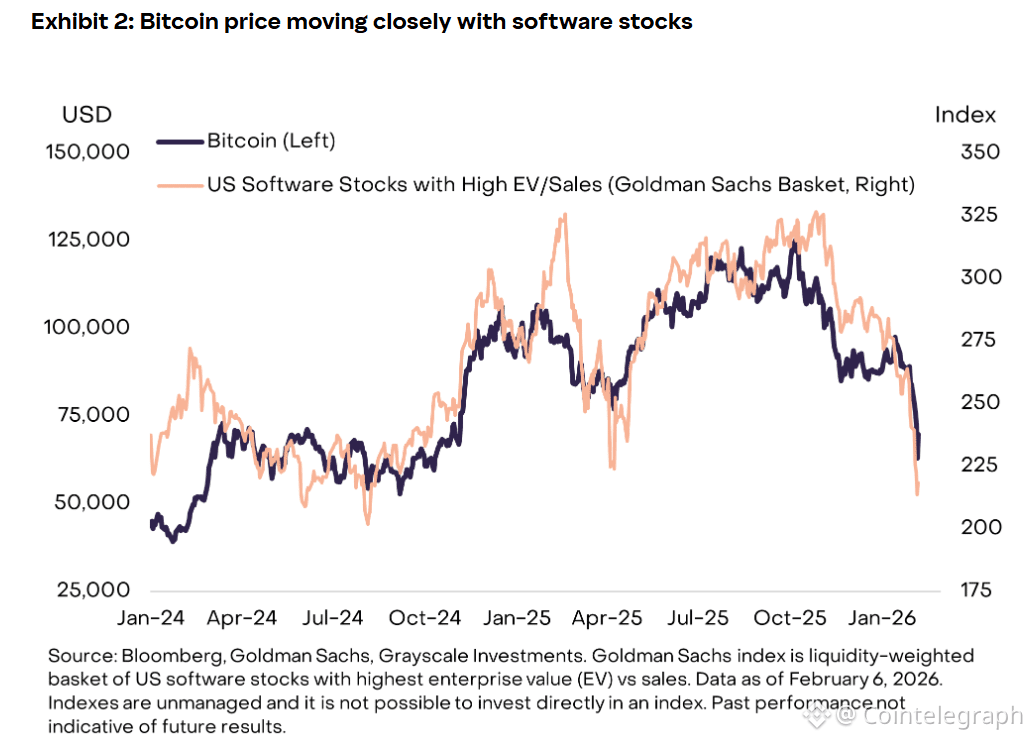 Bitcoin’s recent price performance tracks closely with software stocks. Source: Grayscale
BitMine adds 40,613 ETH during market sell-off
Ether treasury company BitMine Immersion Technologies added 40,613 ETH to its holdings during the recent market sell-off, reinforcing its long-term bet on Ether even as prices plunge and paper losses reach billions of dollars.
The purchase raised BitMine’s total Ether stash to more than 4.326 million ETH, worth about $8.8 billion at current levels. According to DropsTab data, the company is now sitting on around $8.1 billion in unrealized losses on its ETH position, reflecting a significant gap between its cost basis and today’s market price.
Despite investor criticism and pressure on its stock price, which has fallen sharply over recent months, BitMine chairman Tom Lee said the company’s strategy is designed to track Ether’s long-term trajectory and benefit from future recoveries. The company’s broader crypto and cash portfolio is valued at roughly $10 billion.
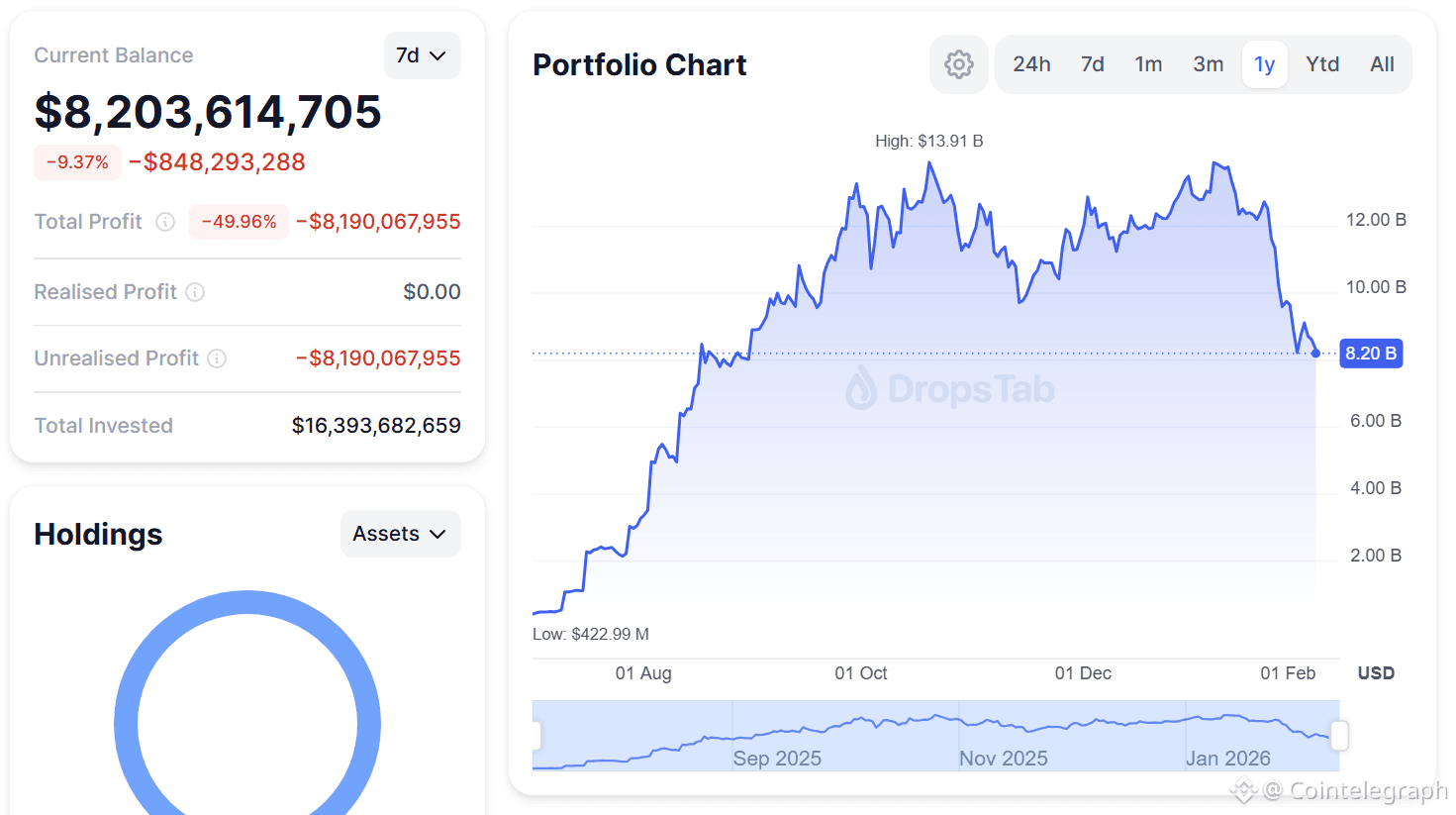 BitMine’s paper losses now exceed $8.1 billion. Source: DropStab
BlackRock buys UNI, brings BUIDL to Uniswap
BlackRock is deepening its push into decentralized finance by listing its tokenized money market fund on Uniswap, a significant step for institutional DeFi adoption.
The asset manager’s USD Institutional Digital Liquidity Fund (BUIDL) is now available on the decentralized exchange, giving whitelisted institutional investors the ability to trade the tokenized Treasury product onchain. As part of the move, BlackRock is also purchasing Uniswap’s governance token, UNI.
BUIDL is the largest tokenized money market fund, with more than $2.1 billion in assets. The fund is issued across multiple blockchains, including Ethereum, Solana and Avalanche. In December, it surpassed $100 million in cumulative distributions generated from its US Treasury holdings.
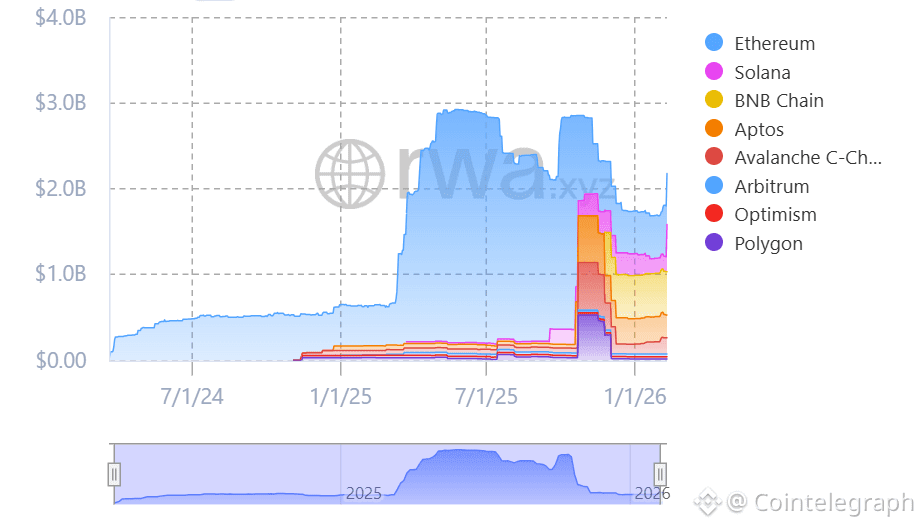 BlackRock’s BUIDL has more than $2.1 billion in assets. Source: RWA.xyz
Polymarket sues Massachusetts over state regulation of prediction markets
Decentralized prediction market Polymarket has filed a federal lawsuit against the state of Massachusetts, challenging state authorities’ efforts to restrict or shut down its event-based trading products.
Polymarket’s chief legal officer, Neal Kumar, confirmed the filing on Monday, saying unresolved legal questions around jurisdiction should be settled at the federal level rather than through state enforcement. The lawsuit is preemptive, aimed at blocking any action by Massachusetts Attorney General Andrea Campbell that Polymarket contends would unlawfully interfere with federally regulated markets.
The company argues that the Commodity Futures Trading Commission (CFTC), not individual states, has exclusive authority over event contracts like those offered on its platform, and that state actions risk fragmenting national markets.
 Source: Neal Kumar
Crypto Biz is your weekly pulse on the business behind blockchain and crypto, delivered directly to your inbox every Thursday.


