Fabric Protocol begins in a quiet corner of a café, with a notebook open, and the kind of conversation that drifts from one thought to another without ever feeling forced. I remember trying to explain it to a friend who paints for a living. “So it’s about robots?” she asked, a hint of skepticism in her voice. And I realized right away that wasn’t the question. She wasn’t asking about wires or ledgers—she was asking about trust, about connection, about whether something human could really survive inside what we build.
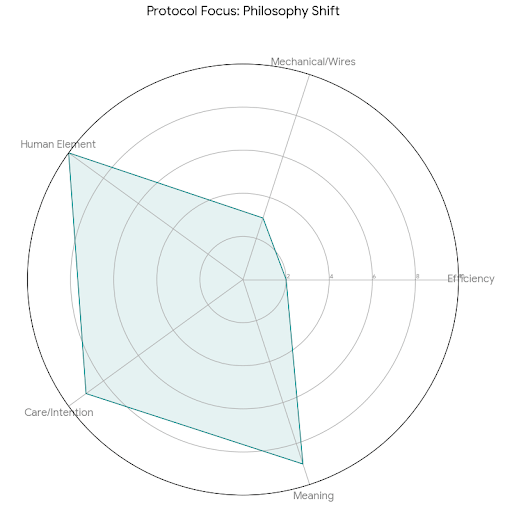
Later, in a small apartment in Kyoto, I watched a young engineer trace his fingers over a tiny robot chassis, murmuring about making something that felt alive—not in a mechanical way, but in the sense of care. He wasn’t thinking about efficiency; he was thinking about what it means to shape the world alongside something you’ve poured yourself into.
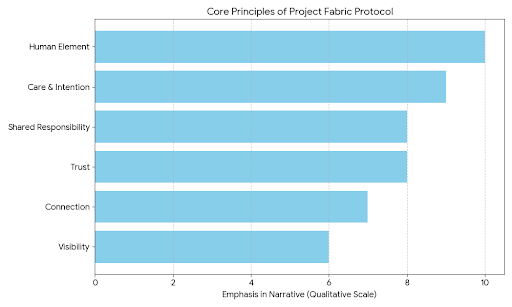
I think of Sara in Toronto, sending letters about late nights, coffee rings, frustration folded into hope. She wanted her work to matter, to be visible, to exist in a space where intention could be trusted. Reading her words, I understood something simple and urgent: the human element is everything.
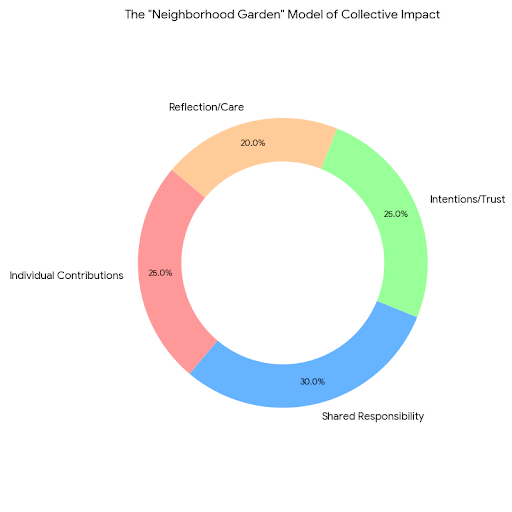
Fabric Protocol is that human element made tangible. It’s not just infrastructure or a network. It’s a place where intentions meet, where responsibility can be shared, and where every participant has the chance to shape, question, and care. Like a neighborhood garden, every contribution changes the soil, every action ripples outward, and everyone who tends it leaves a mark.
Walking through a park as cherry blossoms fall, I think about all these quiet efforts, all these hands reaching toward meaning. Every thoughtful act, every pause to reflect, every shared responsibility becomes part of a larger story. Fabric doesn’t just coordinate—it reflects, preserves, and amplifies the care we bring to what we create. And maybe, in the end, that’s what building really is: creating spaces where humans and their ideas can meet, gently, honestly, together.