
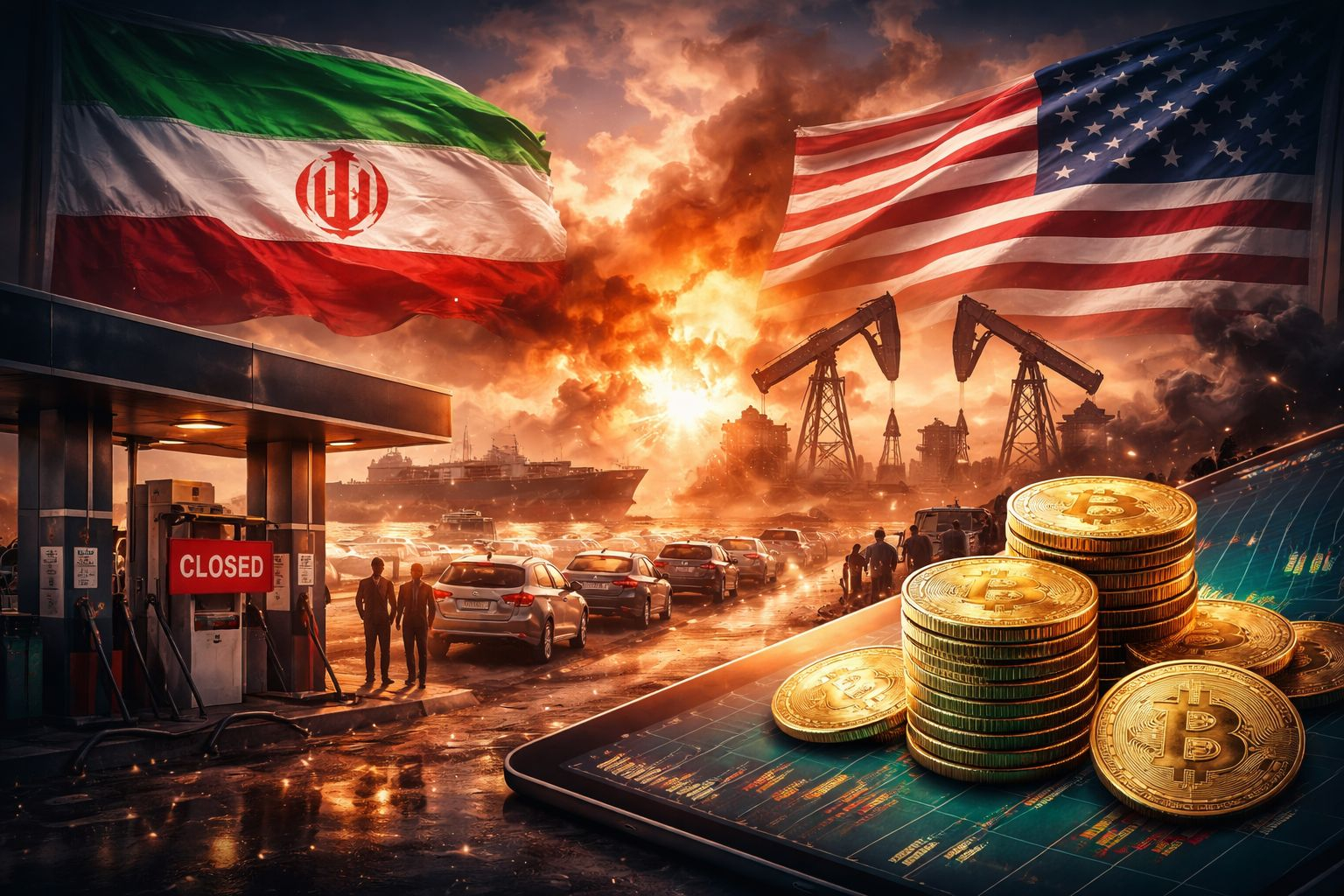
 #irantrump #OilMarket today’s interconnected world, political tensions rarely stay limited to diplomacy or military strategy. They quickly spread into global markets, affecting energy supplies, transportation costs, and financial systems. Recently, rising tensions between Iran and the United States have once again sparked global concern. While political leaders discuss strategy and security, ordinary people and investors are paying attention to something more immediate — the possibility of an oil supply crisis.
Oil has always been one of the most powerful resources in the global economy. From transportation to manufacturing, almost every industry relies on it in some way. When supply chains are threatened or disrupted, the impact can ripple through the entire world economy. The situation becomes even more serious when the countries involved are key players in global energy routes.
Iran sits in one of the most strategically important regions for oil transportation. A large portion of the world’s oil passes through the Strait of Hormuz, a narrow shipping route near Iran. If tensions escalate and this route becomes unstable, the consequences could affect fuel supplies for many countries across Asia, Europe, and beyond. Even the possibility of disruption is enough to make energy markets nervous.
In recent weeks, reports from different parts of the world have suggested growing concerns about fuel availability. In some areas, long lines have formed at gas stations as people rush to fill their tanks, worried that prices could suddenly rise. In other places, a few fuel pumps have temporarily closed due to supply delays or transportation challenges. While these situations may vary by region, they reflect a broader fear spreading through global markets: uncertainty about energy stability.
When oil becomes scarce or expensive, the first visible effect is usually rising fuel prices. Transportation companies must pay more for fuel, which increases the cost of shipping goods. Manufacturers face higher production expenses, airlines pay more for jet fuel, and eventually everyday consumers begin to feel the pressure through higher prices for basic products. Economists often describe this chain reaction as an inflation shock, where one resource shortage affects multiple sectors of the economy.
History has shown that geopolitical conflicts often trigger dramatic reactions in financial markets. Investors become cautious, stock markets may fluctuate, and commodities like gold and oil typically experience rapid price movements. During uncertain times, traders look for assets that might protect their wealth or provide new opportunities.
This is where the cryptocurrency market begins to attract attention. Over the past decade, digital assets have evolved from a niche technology experiment into a global financial ecosystem. Millions of people now trade cryptocurrencies daily, and platforms like Binance have become major hubs for this activity. When traditional markets face uncertainty, many investors start exploring alternative financial systems, including crypto.
Crypto markets operate differently from traditional financial markets. They run 24 hours a day, seven days a week, without the same geographical restrictions. This means that global news events can immediately influence trading sentiment. If a major geopolitical event occurs, traders from different continents can react instantly.
During periods of global instability, crypto trading volume often increases. Some investors see volatility as an opportunity for short-term trading, while others believe digital assets could act as a hedge against economic uncertainty. Although cryptocurrencies are still considered risky investments, their growing role in global finance cannot be ignored.
Another interesting aspect is how energy crises sometimes influence discussions about blockchain technology. Bitcoin mining, for example, requires large amounts of electricity. When energy prices rise due to oil shortages or geopolitical conflicts, the economics of mining operations can change. Some miners may reduce activity, while others search for cheaper renewable energy sources to maintain profitability.
At the same time, rising energy costs can accelerate innovation. Developers and companies working in the blockchain industry are constantly exploring more energy-efficient technologies. Newer blockchain networks are designed to use significantly less energy than earlier systems. This push toward efficiency may become even more important if global energy markets remain unstable.
For traders and investors using platforms like Binance, global news events have become an essential part of market analysis. Cryptocurrency prices are influenced not only by technical indicators and market trends but also by global politics, economic policy, and energy supply developments. Understanding these connections helps traders make more informed decisions.
For example, if oil prices surge due to geopolitical tensions, inflation fears may rise across multiple economies. Central banks could respond by adjusting interest rates or monetary policy. These financial decisions can indirectly influence cryptocurrency markets, as investors reconsider where to allocate their capital.
Another factor to consider is public sentiment. In times of uncertainty, people naturally look for financial security. Some turn to traditional assets like gold, while others explore digital assets because of their decentralized nature. The idea that cryptocurrencies operate outside traditional banking systems attracts attention during periods of global tension.
However, it is important to approach crypto trading with a balanced perspective. Markets driven by news events can become extremely volatile. Prices may rise quickly but can also fall just as fast. Successful traders usually combine careful research with risk management strategies rather than reacting purely to headlines.
Looking ahead, the global situation will depend largely on diplomatic decisions and international cooperation. Political tensions do not always lead to long-term economic crises, but they often remind the world how fragile supply chains can be. Energy, transportation, and finance are deeply connected systems, and disruptions in one area can quickly influence the others.
For the crypto community, events like the current tensions between Iran and the United States highlight the growing relationship between global politics and digital finance. Cryptocurrency markets are no longer isolated from world events. Instead, they are becoming part of the broader financial landscape where international developments play a key role.
In the end, the most valuable skill for modern investors may be awareness. Watching charts and technical indicators is important, but understanding global trends is equally essential. Oil markets, geopolitical tensions, and economic policies all contribute to the environment in which financial markets operate.
Whether someone trades oil, stocks, or cryptocurrencies, the lesson remains the same: the world is more connected than ever before. A conflict in one region can influence fuel supplies, market sentiment, and investment strategies across the globe. For traders on platforms like Binance, staying informed about global developments is not just useful — it has become a necessary part of navigating modern financial markets.#iran #TrumpNFT #BinanceTGEUP