
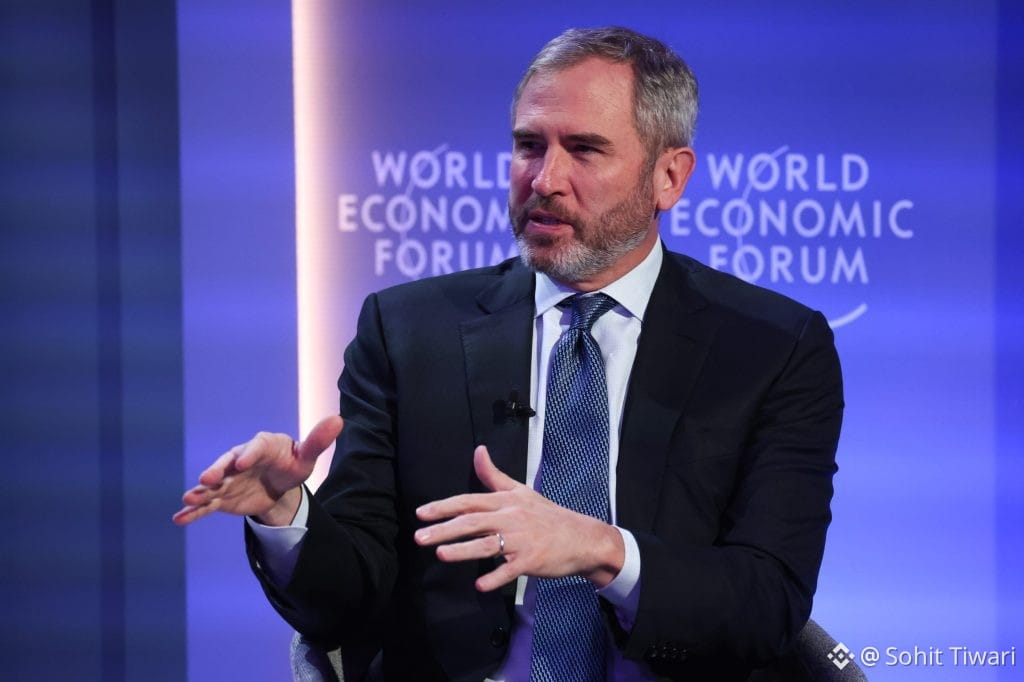
Ripple, the fintech company behind the XRP Ledger, is making headlines again. The firm has announced plans to buy back $750 million worth of shares from its early investors and employees. This move values the company at a staggering $50 billion.
This new valuation marks a significant 25% increase for Ripple since November, when it closed a $500 million funding round backed by major players like affiliates of Citadel Securities and Fortress Investment Group.
Why This Matters for Crypto Traders
For those watching the charts, this news provides a crucial macro-level context for $XRP. While the crypto market has cooled off significantly since its late-2024 peak, Ripple’s growing valuation stands out as a rare success story in the institutional finance world.
To put the broader market dip in perspective:
$BTC is down roughly **44%** from its all-time high of $126,000 in October.
· $XRP is currently trading around $1.38, down about 62% from its July peak, according to Binance data.
So, how is Ripple thriving while the market corrects? It comes down to their business model and diversification.
Beyond the Charts: Ripple’s Expansion
Founded in 2012, Ripple is one of the original players in the crypto space. Its primary mission is to revolutionize global payments. By using the XRP Ledger, Ripple enables financial institutions to send money across borders faster and cheaper than traditional systems, using $XRP as a bridge currency.
Despite the volatility in the $XRP price, Ripple has been aggressively expanding its traditional finance footprint. In 2025, the company went on an acquisition spree to build out its trading and stablecoin infrastructure:
· It acquired prime brokerage Hidden Road for $1.25 billion.
· It purchased treasury management firm GTreasury for $1 billion.
Earlier this month, Ripple revealed it had processed over $100 billion in transactions, showcasing its real-world utility.
How Ripple Weathers the Storm
For traders, it’s important to understand the dynamics that allow Ripple to survive—and even thrive—during a bearish phase:
1. XRP Reserves: Ripple holds large reserves of $XRP, which it periodically sells to fund operations.
2. Product Diversification: By acquiring traditional finance firms, Ripple is reducing its sole reliance on the volatile price of $XRP, building a more resilient financial services empire.
Key Takeaway:
While short-term traders watch the $XRP support levels, long-term investors might view this $50 billion valuation as a sign of institutional confidence in Ripple’s infrastructure. The separation between the company’s value and the token’s spot price is a unique dynamic worth monitoring.
---
Correction: A previous version of this report indicated that Ripple’s November funding round was directly backed by Citadel Securities and Fortress Investment Group. The round was actually backed by affiliates of those firms.
#BTCReclaims70k #PCEMarketWatch #OilPricesSlide #Iran'sNewSupremeLeader #BTCReclaims120K

