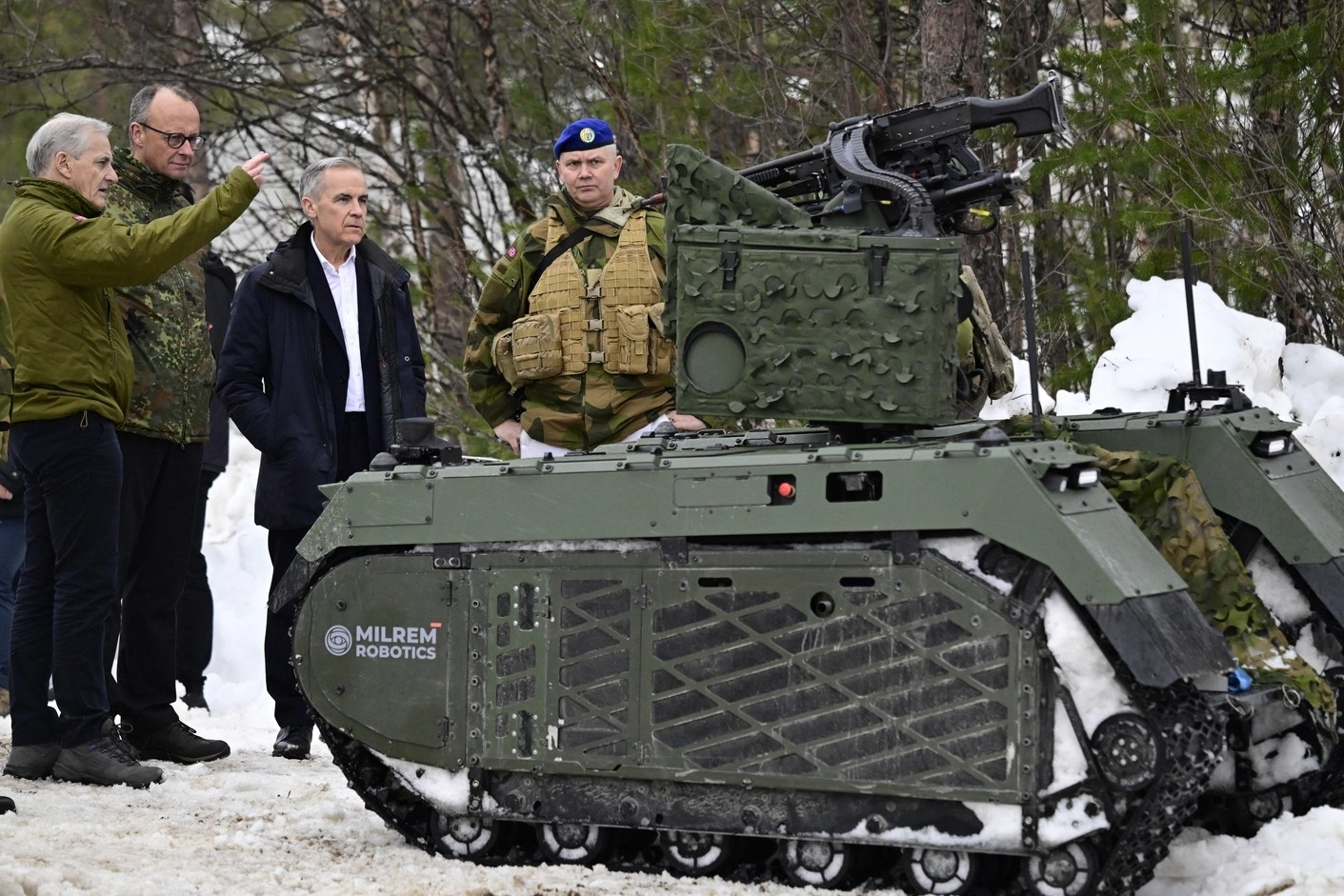
A significant diplomatic rift has emerged within NATO as Canadian Prime Minister Mark Carney, German Chancellor Friedrich Merz, and Norwegian PM Jonas Gahr Støre publicly voiced their disagreement with the Trump administration’s recent move to ease sanctions on Russian oil. 📉
🤝 A United Front in the Arctic
Gathered at the Bardufoss Airbase for the "Cold Response" military exercises, the three leaders stood against a backdrop of unmanned combat vehicles to send a clear message: The pressure on Russia must remain. While the U.S. framed the temporary lifting of sanctions as a move to stabilize global energy prices amidst Middle East tensions, America's key allies fear this "breather" only serves to fuel the Russian war machine. ⛓️💥
🗝️ Key Takeaways from the Summit:
Sticking to the Plan: PM Mark Carney emphasized that Canada’s position is unwavering—sanctions must be maintained, particularly against the "shadow fleet" transporting Russian oil. 🚢
Strategic Disagreement: Chancellor Merz expressed surprise at the sudden decision from D.C., reiterating that now is the time for more pressure, not less. 🇩🇪
The Global Impact: President Volodymyr Zelenskyy echoed these concerns from Paris, noting that more oil revenue for Russia directly translates to more drone attacks and instability. 🚫💰
Security vs. Policy: Despite the policy clash, all three leaders affirmed their continued trust in the U.S. as a security partner, citing long-standing cooperation through NORAD and Arctic defense. 🏔️
As the war in Ukraine enters its fifth year, this split highlights the delicate balancing act between managing domestic energy costs and maintaining a unified geopolitical wall against aggression. ⚖️
🎥 Stay Informed
The "Coalition of the Willing" continues to prioritize European peace and security, even when it means calling out their closest allies. 🗣️
#CanadaPolitics #NATO #UkraineWar #EnergySecurity #Geopolitics