
Most chains make you spend the token to transact. Midnight flips that model.
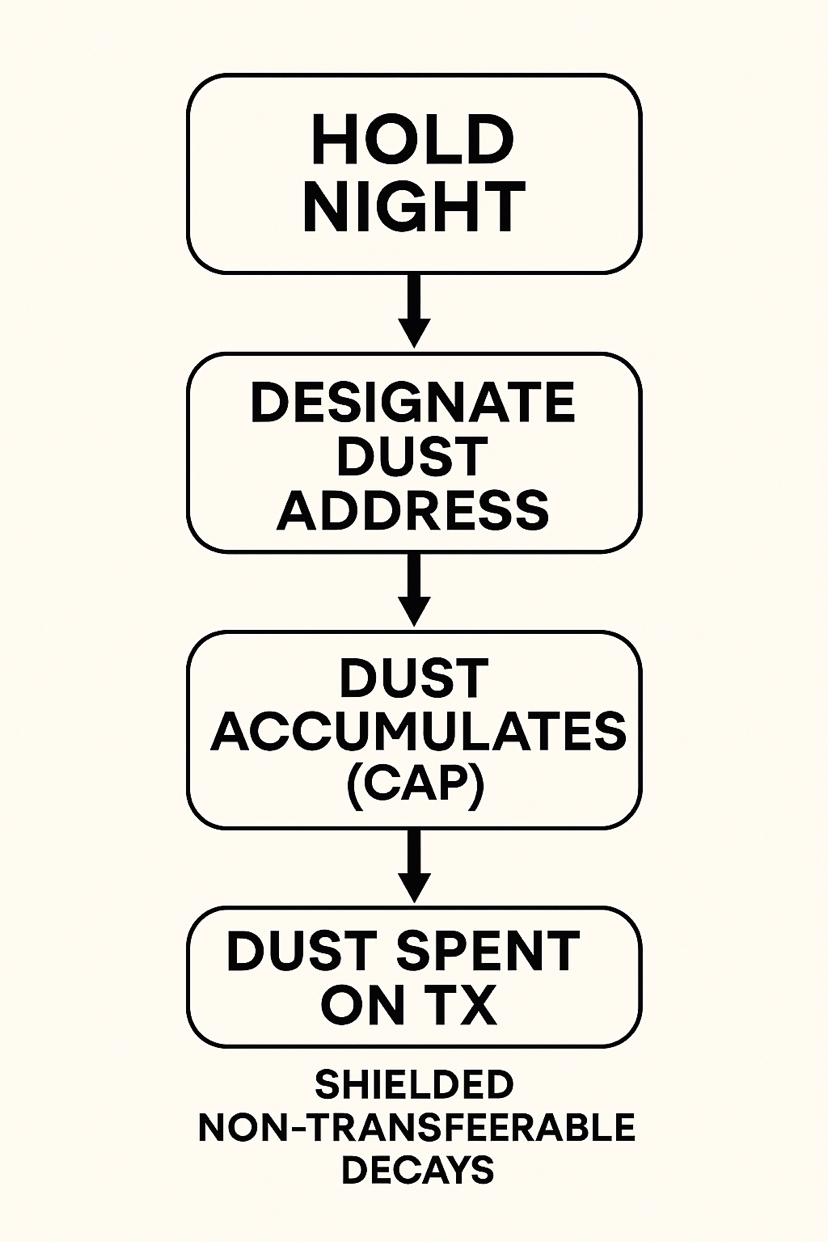
In Midnight’s design, $NIGHT isn’t what you burn for fees. Instead, $NIGHT generates DUST, and DUST is the resource consumed to run transactions.
To generate DUST, you must designate a DUST recipient address on the Midnight network — then your DUST balance rises over time until it hits a cap tied to your $NIGHT balance. When you use DUST, it gets burned; NIGHT remains.
Why I think this matters: It tries to create more predictable operations. If network usage grows, you’re not forced into a “gas bidding war” where the native token price spikes your operational cost.
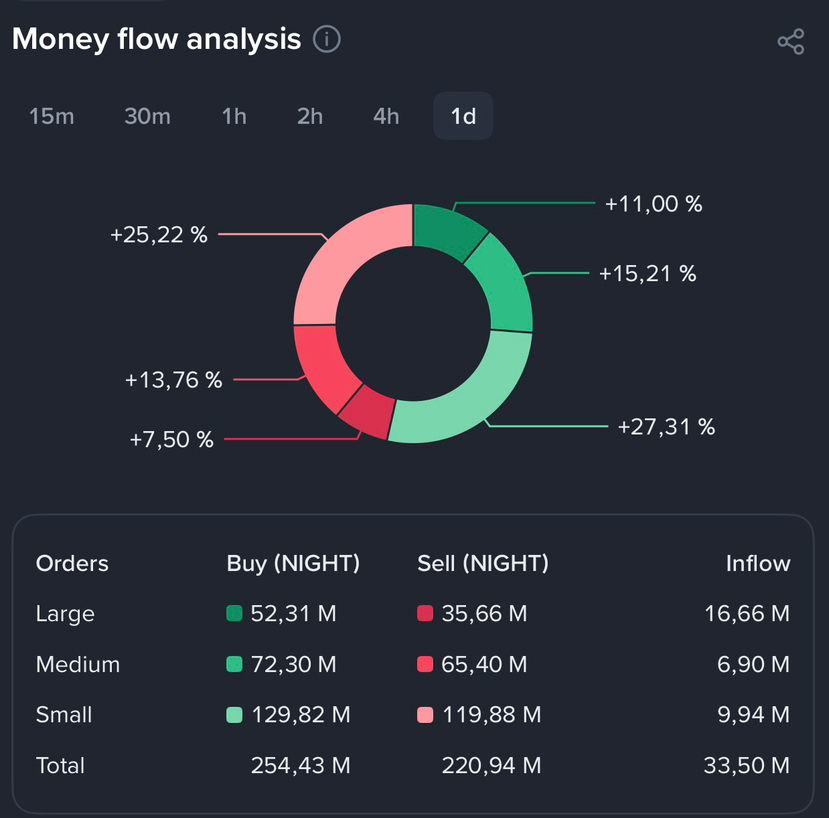
Market note (from your screenshots): NIGHT recently moved inside a wide early range (~0.0424 → ~0.0530) and is trading near ~0.0495–0.0497. RSI(6) is high (~73–78), which usually means momentum is strong but also “hot.” (Not advice — just reading the indicator.)
💬 Comment prompt: If “gas” was generated instead of purchased, would more apps onboard? Yes/No — why?