
@Fabric Foundation #ROBO $ROBO

The first time I watched a warehouse robot move a shelf across a floor, it looked almost boring. No drama, no sparks. Just a quiet machine sliding through a grid of other machines, each doing its job with careful precision. But the longer I watched, the clearer something became. The impressive part wasn’t the robot itself. The real story was everything coordinating behind it.
Because a robot economy doesn’t break down from weak hardware. It breaks down from confusion.
Right now the world is deploying robots faster than the systems that organize them. Industrial robotics installations crossed roughly 540,000 new units globally in 2023 according to international manufacturing estimates. That number matters because it shows acceleration, not just adoption. Warehouses, farms, hospitals, delivery fleets, even construction sites are filling with machines that can sense, move, and decide.
But hardware alone doesn’t create an economy. Coordination does.
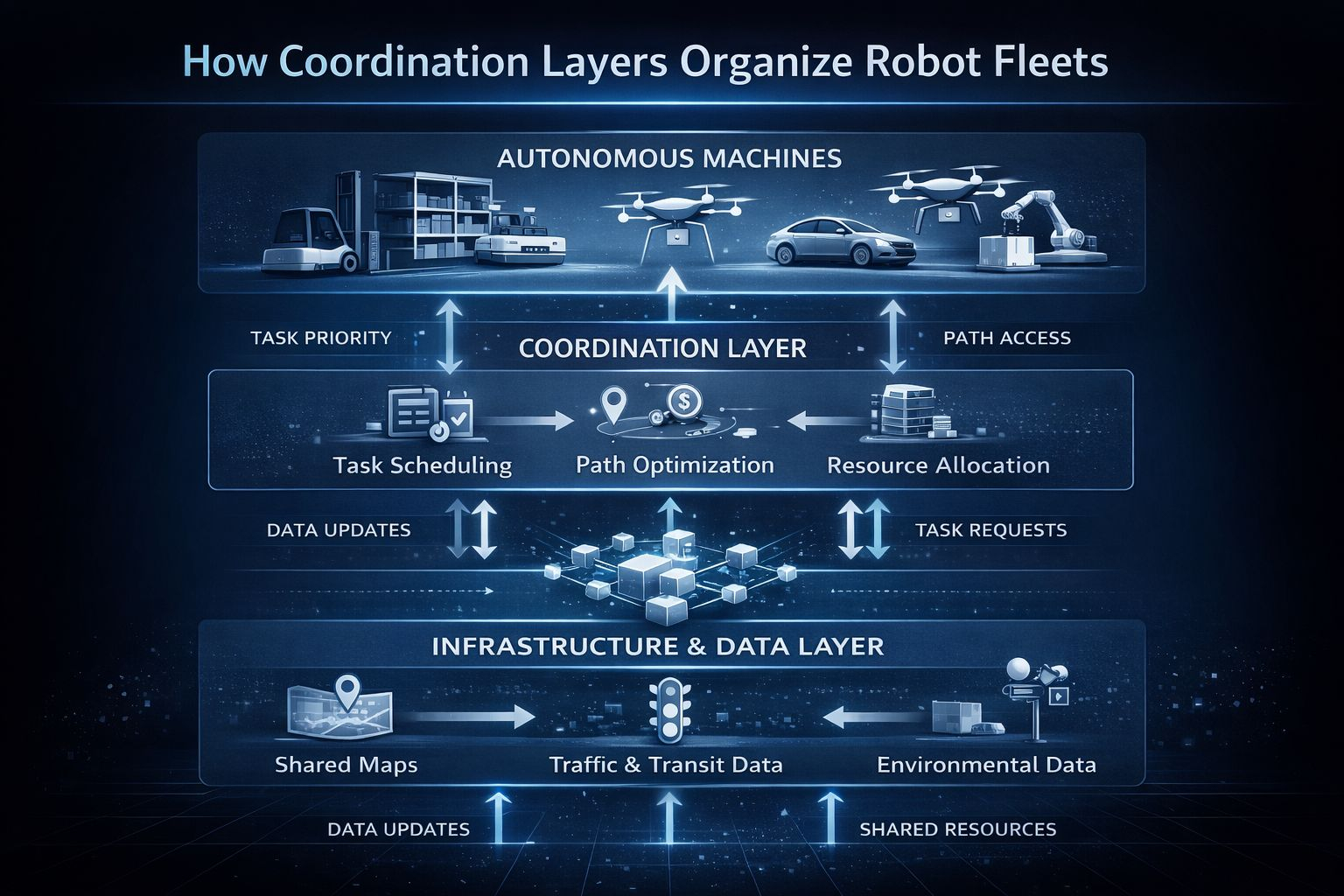
Think about what actually happens inside a robotic warehouse. A robot picks up a shelf. Another robot moves past it. A third carries an item to a packing station. On the surface it looks like simple automation. Underneath, dozens of invisible decisions are happening every second. Which robot moves first. Which path stays open. Which task has priority. Who gets the next job.
Those decisions need a shared layer of rules.
Without that layer, robots behave like drivers at an intersection with no traffic lights. Each machine can technically move. None of them knows who should move next.
That is why companies deploying robot fleets are quietly building coordination software before expanding their hardware fleets. Amazon’s robotic warehouses are a good example. The company has deployed more than 750,000 mobile robots across fulfillment centers. That number sounds like a hardware milestone. In reality, it’s a coordination problem.
Each robot must constantly negotiate space with thousands of others while optimizing routes. If the system fails for even a minute, throughput drops immediately. Warehouses processing hundreds of thousands of packages per day cannot tolerate confusion between machines.
Understanding that helps explain something people often miss about robot economies. Robots are not just tools. They are participants in systems.
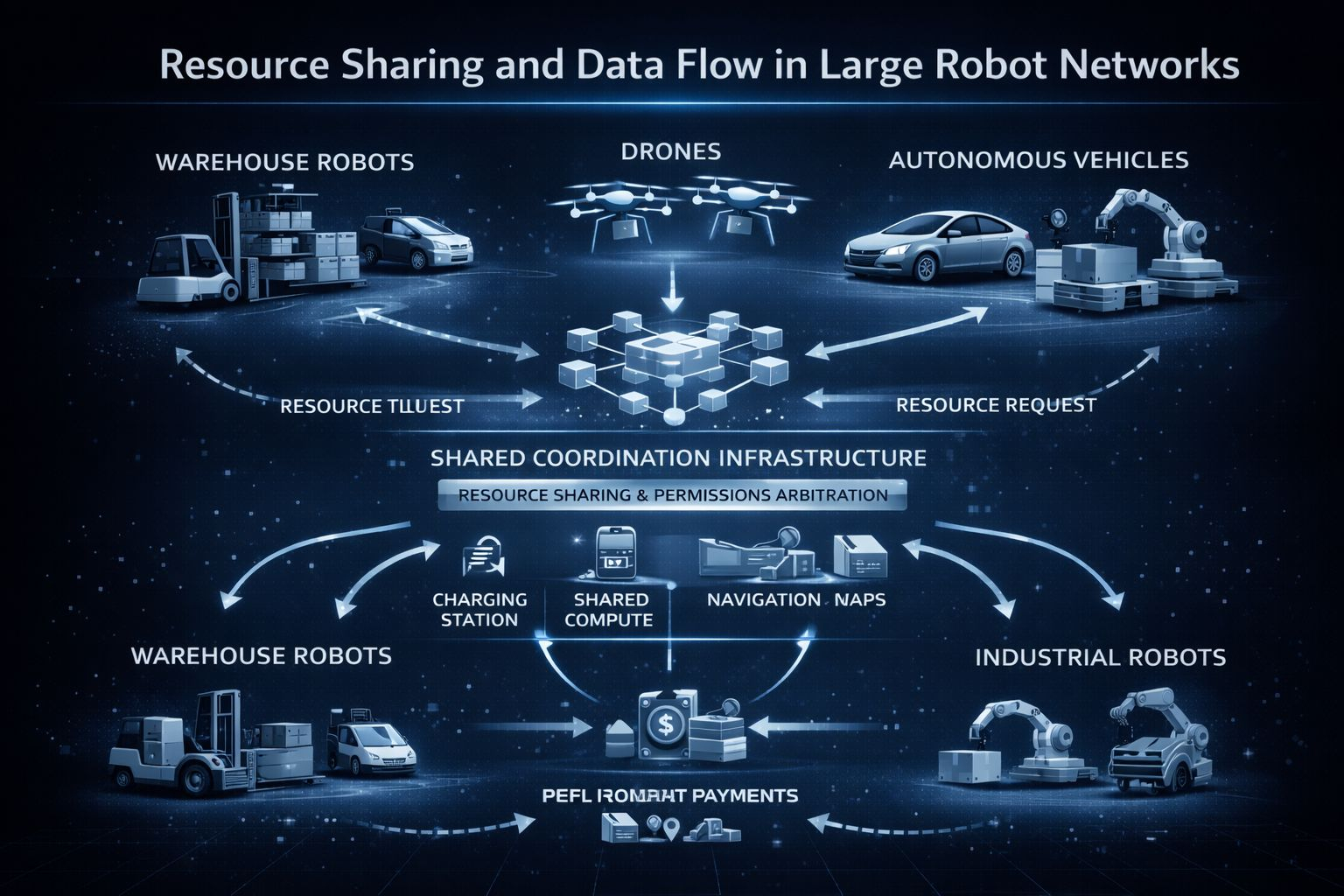
Meanwhile another layer is starting to form around how robots interact financially. Machines are beginning to request services, purchase data, and allocate resources in automated environments. Early versions already exist in logistics platforms and energy networks where software agents negotiate pricing in milliseconds.
That is where coordination layers start looking a lot like economic infrastructure.
If a fleet of delivery drones needs charging stations, they must decide who gets access first. If warehouse robots share processing power or navigation maps, someone has to manage that access. If autonomous vehicles begin paying tolls or buying electricity automatically, those transactions need rules.
Surface level, this looks like payment systems for machines. Underneath, it is governance.
Some early blockchain-based frameworks are experimenting with this idea. The reason is simple. A decentralized ledger creates a shared record that machines can verify without trusting a central operator. If ten thousand robots are interacting across companies or cities, that shared record becomes useful.
In crypto markets this idea has quietly gained traction. Infrastructure tokens tied to machine coordination networks have started appearing in venture discussions and early-stage funding rounds. It remains early, but the signal is interesting.
Venture investment into robotics startups crossed roughly $12 billion globally in 2024 based on industry funding trackers. Meanwhile the market for robot software platforms is growing faster than the hardware sector itself. Analysts estimate robot software spending could reach around $35 billion by 2030, nearly doubling its current size.
Those numbers reveal a pattern. Hardware launches the industry. Software organizes it.
Of course, critics point out that many robots already work perfectly well under centralized control. Factory robots have operated that way for decades. A single company runs the machines, manages the data, and controls the environment.
That argument holds in closed systems.
The moment robots leave controlled environments, coordination becomes harder. Delivery robots moving through cities interact with traffic systems. Agricultural drones share airspace. Autonomous vehicles rely on mapping networks updated by other vehicles.
Each new connection increases the need for shared rules.
And there is another risk sitting underneath all this. Power concentration.
If a single company controls the coordination layer for large robot networks, it effectively governs how machines behave across industries. Small software rules begin shaping economic outcomes. Which robot gets priority. Which service gets access. Which company’s machines interact smoothly.
History suggests infrastructure layers eventually attract competition. The internet went through the same pattern. Early networks were isolated. Later they required protocols that allowed everyone to communicate.
Robot economies appear to be moving toward that same stage.
Early signs suggest coordination protocols will matter more than people expect. When thousands of machines operate independently, the quiet infrastructure deciding how they cooperate becomes the foundation of the system.
That momentum creates another effect. Data gravity.
Robots generate enormous amounts of environmental data. Warehouse maps, traffic patterns, equipment wear, delivery routes. When coordination layers manage these interactions, they also become repositories of valuable information.
Handled well, that data improves efficiency across entire networks. Handled poorly, it creates surveillance and control risks that regulators will eventually confront.
Meanwhile the market is already testing the edges of machine coordination. Autonomous taxi fleets in several cities are running thousands of rides per week. Drone delivery pilots are expanding. Industrial robot fleets continue to grow every quarter.
Each of these systems works because something is quietly orchestrating the machines.
When I first looked at the growth numbers in robotics, the instinct was to focus on the machines themselves. Faster arms, better sensors, stronger batteries. That’s the visible progress everyone sees.
But the deeper shift sits underneath.
Robot economies are slowly forming networks where machines interact with other machines, exchange resources, and depend on shared infrastructure. Hardware gives them capability. Coordination gives them order.
If this holds, the next phase of robotics will not be defined by which company builds the best robot. It will be defined by which systems quietly organize millions of them.
And the strange thing is that most people will never notice those systems at all.
They will just experience a world where machines somehow know how to work together.