
Most people are asking: "Which #Aİ is the smartest?"
The better question is: "Which AI can you actually trust?"
There's a hard ceiling that no single model can break through. Reducing hallucinations introduces bias. Reducing bias increases hallucinations. You can't fix both with one model — that's not a flaw, it's physics.
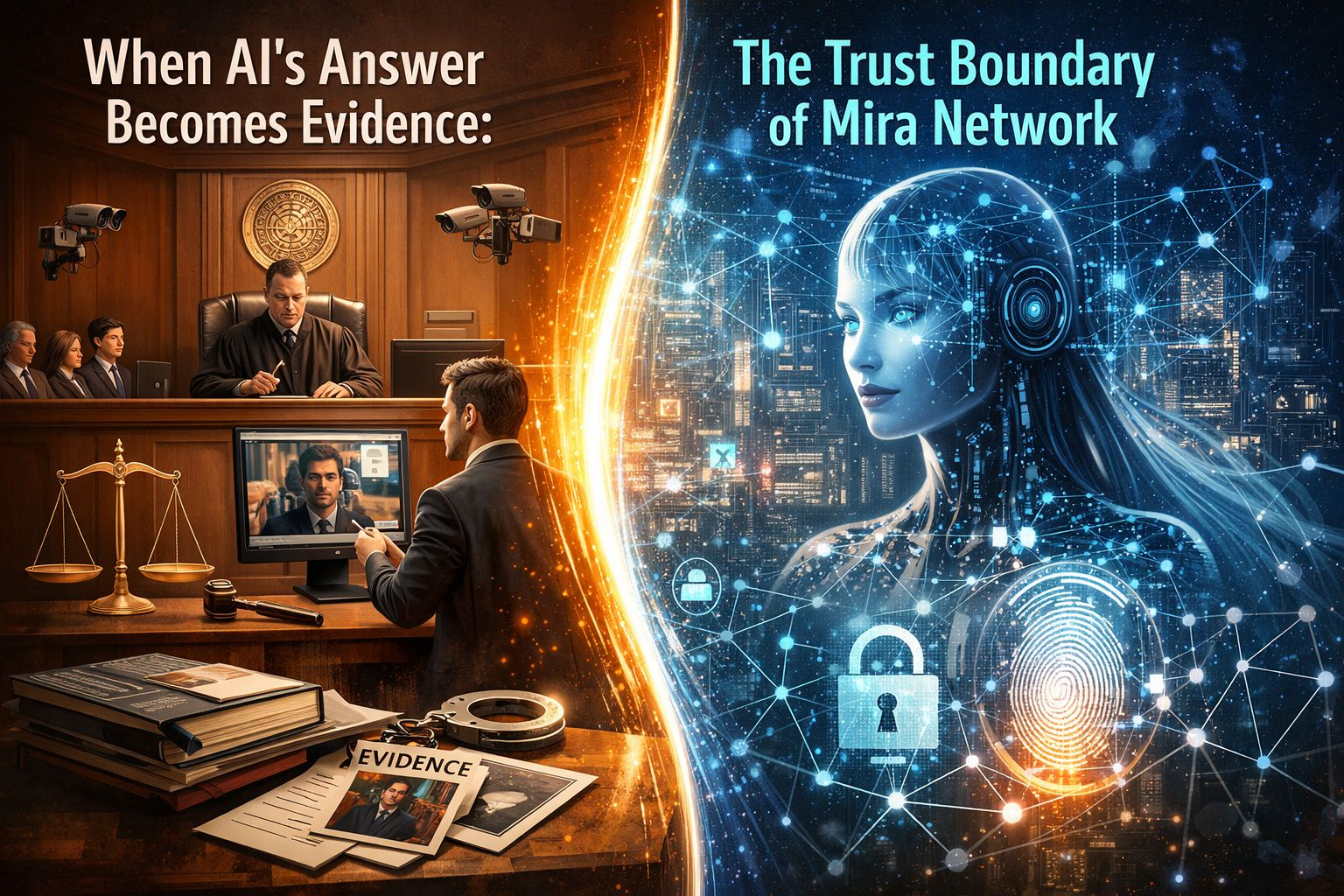
MIRA's solution isn't a smarter AI. It's a court of AIs.
Here's how it works:
→ AI generates output
→ Mira breaks it into individual factual claims
→ Distributed verifier nodes (different models, different architectures) vote on each claim
→ Supermajority = cryptographic certificate on Base L2
→ Failure = flagged or rejected before it reaches you
No single node sees full content. No central authority decides truth. Just consensus — with economic penalties for dishonest nodes.
Real numbers right now:
📊 19M queries/week
👥 4–5M users
✅ 96% verification accuracy
Already live in: AI trading signals (GigabrainGG), autonomous agents (ElizaOS), education (Learnrite), and multi-model chat (Klok).
Yes — $MIRA got crushed post-TGE. Down 90%+ from launch. The market punished it like infrastructure often gets punished: early, wrong timing, real fundamentals.
TCP/IP didn't look valuable in 1974 either.
The rails are being built. The trains are coming.
The question isn't if AI needs a trust layer. It does.
The question is who builds the standard.
Watch: Irys partnership (permanent verification storage), Kaito Season 2 completion, and developer SDK adoption — those are the signals that matter, not price action. @Mira - Trust Layer of AI