
The statement "Trading is a zero-sum game" gets thrown around a lot in crypto circles, and honestly, it sparks some of the most heated debates in the crypto space. Is it true? Partially YES, partially NO , and understanding the nuance can actually make you a better trader (or at least save you from some painful lessons).
Let's break it down honestly, with real-world examples from the markets we all trade.
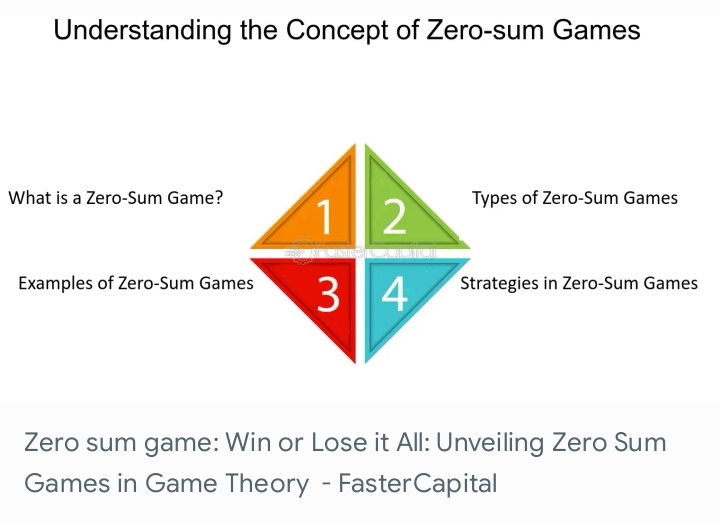
First, what does zero-sum even mean? In a true zero-sum game (like poker), one player's gain equals another's loss, the total pie doesn't grow or shrink; it just gets redistributed. No new value is created.
In spot trading (buying and holding #BTC, #ETH, or alts like #SOL), it's not purely zero-sum. Why? Because the underlying asset can gain real value over time.
Think about Bitcoin: Early adopters bought when it was pennies, held through the chaos, and saw massive growth from network effects, adoption (El Salvador, ETFs, corporate treasuries like MicroStrategy), and halvings reducing supply. When BTC went from $10k to $100k+, it wasn't just someone else losing, new money flowed in from institutions, retail FOMO, and global demand. The market cap expanded. Everyone who held could win together in a bull run. That's positive-sum vibes.
Same with stocks: Long-term, the market grows with economic productivity, dividends, buybacks, innovation. Warren Buffett-style investing isn't zero-sum; the economy creates wealth.
But here's where it flips: Short-term trading, especially leveraged/futures/derivatives — that's where the zero-sum reality hits hard.
In perpetual futures on Binance or any exchange, every long has a corresponding short. If you profit $10k on a leveraged BTC long, someone on the other side (or the funding rate mechanism) is losing roughly that amount (before fees). The exchange takes a cut too, so overall it's negative-sum after commissions and funding.
Example: During the 2022 bear market crash, tons of leveraged longs got liquidated, their losses funded the shorts who bet against it. One trader's "genius call" was paid for by someone else's rekt position.
Forex is similar: Currency pairs don't "grow" like company earnings; it's mostly speculation on relative strength.
Even in crypto spot, when it's pure day-trading or scalping without holding for fundamentals, it's closer to zero-sum because you're mostly trading against other traders' emotions/timing, not capturing new value creation.
Real talk from recent markets:
In the 2024-2025 bull run, many held #BTC and #ETH through dips and came out way ahead, positive-sum thanks to inflows.
But in meme coin casinos or hyper-volatile alts, it's brutal zero-sum: Pump.fun launches, early buyers dump on latecomers, rugs happen, winners take from losers directly.
High-frequency traders, market makers, and whales often win consistently because they have edge (speed, info, liquidity provision), while retail chases and pays the fees, again, negative-sum for most.
So, is trading zero-sum? It depends on your style and time horizon.
If you're speculating short-term, fighting for ticks against pros and paying fees - YES, mostly zero/negative-sum. Someone's eating your lunch.
If you're investing long-term in assets with real utility/growth (fundamentals, adoption, scarcity) - no, the pie can grow, and more people can win.
The key takeaway? Respect the game you're in.
If you're grinding futures, treat it like poker: edge, discipline, risk management, or you'll be the one funding others.
If you're building a portfolio for years, focus on conviction in projects, not chasing every pump.
What do you think, are you playing the zero-sum short game or the positive-sum long game? Drop your thoughts below, let's discuss!
#Ethereum #cryptotrading #ZeroSumGame #FuturesTrading $BTC $ETH $SOL