
Robots, Money, and the Hidden Infrastructure of the Future Economy
Most technological revolutions don’t begin with headlines.
They begin quietly, deep inside infrastructure in systems that organize complexity long before the public notices anything has changed.
The internet did not begin with social media or streaming platforms.
It began with TCP/IP, the protocol that allowed computers to communicate.
Cryptocurrency didn’t start with trading apps or meme tokens.
It started with Bitcoin’s ledger a system that allowed strangers to coordinate trust without a central authority.
Robotics may be entering a similar phase.
Around the world, a new generation of robots is emerging. Some operate in warehouses, others inspect infrastructure, and many are beginning to appear in agriculture, logistics, and urban services. Over time, robots are expected to move beyond factories and into everyday environments cities, hospitals, farms, and homes.
But this shift raises a difficult question.
If millions of robots begin working across the global economy, how will they coordinate with each other and more importantly, how will they get paid?
Today’s financial system was built for humans. Opening a bank account requires legal identity, documents, signatures, and compliance procedures. Robots do not have passports, HR records, or legal identities in the traditional sense.
Because of this, many conversations about a “robot economy” collapse the moment they touch real financial infrastructure. If payments still flow through human operators, the robot remains just a tool. The human remains the financial endpoint.
That is where the idea behind systems like Fabric Protocol begins.
Instead of forcing machines to fit inside human financial systems, the approach is to give machines their own native endpoints.
In this model, a robot does not need a bank account. Its identity can exist as a cryptographic address a persistent digital identity that can receive payments and interact with networks without relying on traditional banking onboarding.
However, identity alone is not enough.
If creating identities is cheap, then the system becomes vulnerable to abuse. Someone could generate thousands of fake “robots” and drain payments from the network.
For this reason, participation in such systems must carry economic weight. Mechanisms like staking or bonding create a cost for joining the network. These economic barriers act as a form of Sybil resistance, making it expensive to create fake participants.
In traditional payroll systems, background checks and enrollment procedures serve this purpose. In machine-based economies, economic constraints may serve a similar role.
Verification is another critical piece.
In human workplaces, work verification often relies on social systems supervisors, time sheets, audits, and legal accountability. Robots do not operate inside those same institutions.

If payments become automated, verification must become far more rigorous.
Anyone capable of spoofing a “task completed” signal could potentially extract money from the system. As a result, robot payments are less like monthly salaries and more like task-based settlements.
This structure actually aligns well with how machines operate.
Robots don’t think in monthly cycles. They operate through tasks, routes, uptime windows, inspections completed, or deliveries confirmed.
A drone that inspects power lines, a warehouse robot that moves inventory, or a delivery bot that completes a route could all trigger payments based on verifiable outcomes.
Conditions such as service-level agreements, penalties, and escrow mechanisms can also be embedded directly into the system.
Yet one reality remains unavoidable: the physical world is messy.
Most signals proving that work has been completed originate from sensors and systems outside the digital network. Sensors can be manipulated, logs can be falsified, and operators may attempt to game the system.
Any infrastructure designed for robotic economies must therefore assume adversarial environments rather than perfect ones.
Despite these challenges, the need for coordination infrastructure is becoming increasingly clear.
As robotic systems expand into cities, farms, infrastructure networks, and supply chains, isolated systems will become inefficient. Fleets of machines from different manufacturers will need ways to communicate, share data, and operate under shared rules.
This is where protocol-level systems may become essential.
Just as internet protocols allowed billions of computers to connect, robotics may eventually rely on coordination layers that manage identity, computation, governance, and economic exchange.
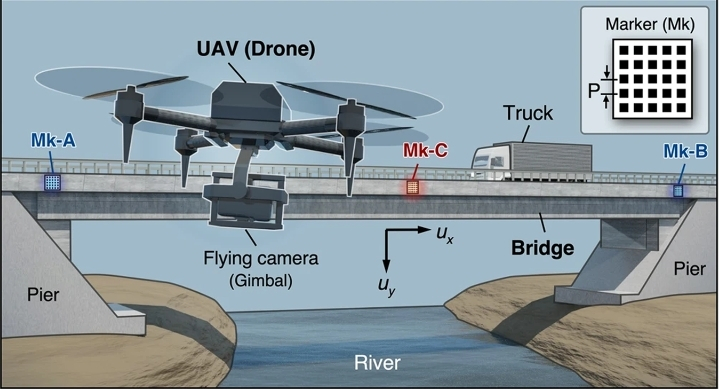
In such a future, robots may appear everywhere delivering packages, inspecting bridges, maintaining energy grids, and supporting industrial operations.
To most people, these machines will simply look like tools performing useful tasks.
But beneath the surface, a deeper system will be operating.
Protocols.
Networks.
Economic rails designed for autonomous machines.
If robotics truly becomes a large part of the global economy, the most important innovation may not be the robots themselves.
It may be the invisible infrastructure that allows millions of machines to work together.