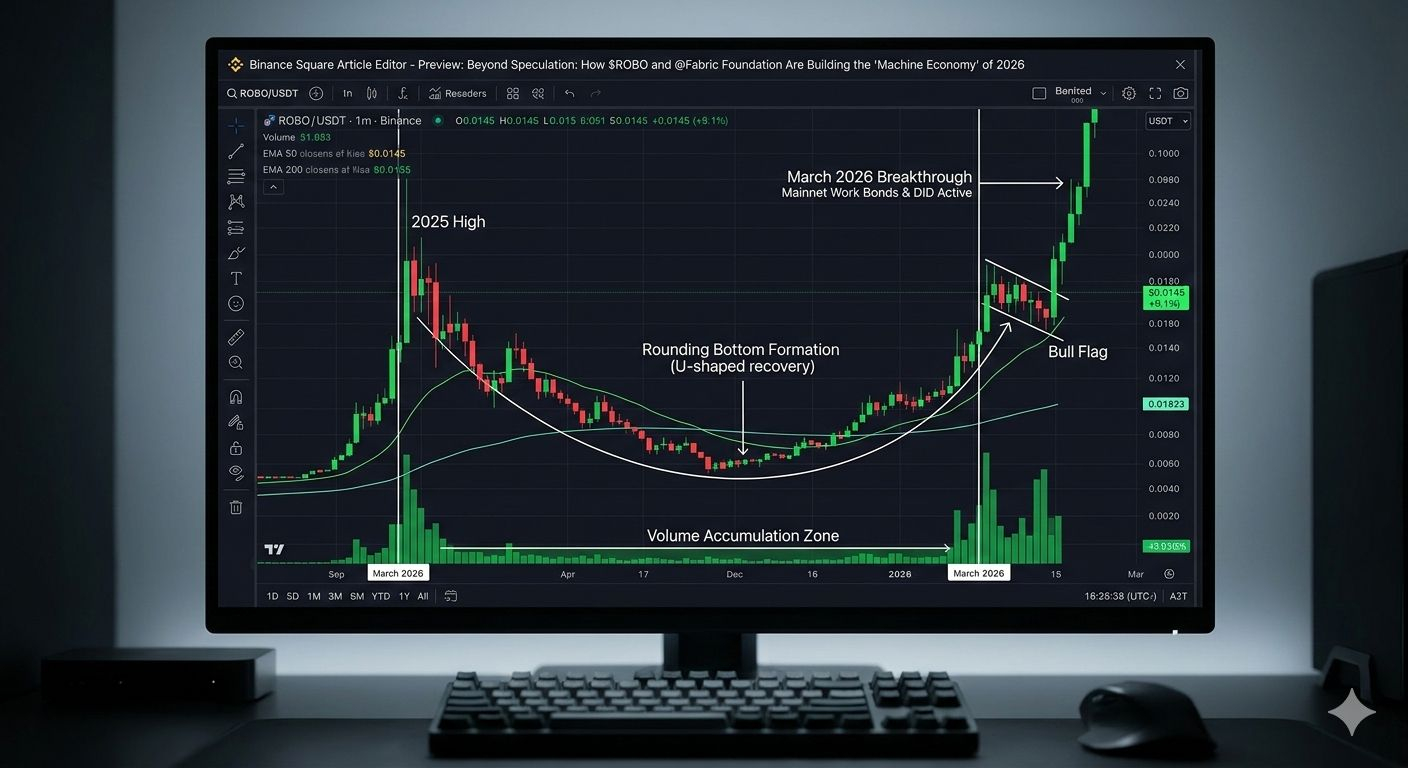
In the ever-evolving landscape of 2026, the intersection of robotics and decentralized physical infrastructure (DePIN) is moving from a niche concept to a global reality. Leading this charge is the @Fabric Foundation, an organization dedicated to building the "Nervous System" of the emerging machine economy. At the core of this transformation is $ROBO, a token that transcends simple speculation to serve as the functional lifeblood for autonomous agents.
Traditional robotics has long been hampered by a lack of financial identity. Machines could perform tasks, but they couldn't natively own wallets or settle payments. The Fabric Protocol changes this by providing a decentralized identity (DID) and payment layer, allowing robots to function as independent economic participants. When an autonomous delivery bot or an industrial arm completes a task on the network, it doesn't just "run code"—it earns and settles value in real-time.
As we move through March 2026, the utility of $ROBO is becoming increasingly multi-dimensional:
Work Bonds: Operators must stake tokens as security deposits to register hardware, ensuring high-quality service and accountability.
M2M Settlement: Robots use the token to pay for their own maintenance, charging, and data queries without human intermediaries.
Community Governance: Through the veROBO model, the community—not just a central corporation—guides the evolution of the protocol, from fee structures to operational policies.
With the Q1 2026 launch of the identity and settlement layers complete, the roadmap now points toward contribution-based incentives for verified task execution. For those watching the DePIN space, this represents the transition from a "Internet of Things" to a sovereign "Internet of Value" for machines. The era of the decentralized, collaborative robot economy is no longer a vision—it’s being built today.
#ROBO #DePIN #AI #Robotics #FabricFoundation