
Introduction
Robotics is moving beyond research labs into real-world applications—automating logistics, assisting in healthcare, and maintaining urban infrastructure. Yet, integrating robots into everyday life raises critical challenges: How do we verify their work? How can robots from different makers cooperate? How can they be securely paid for their services?
The Fabric Protocol addresses these questions by providing a decentralized coordination and economic layer for robots. By combining blockchain-based identity, verifiable work, and tokenized incentives, Fabric enables general-purpose robots to operate safely, flexibly, and economically in a shared ecosystem.
What is Fabric Protocol?
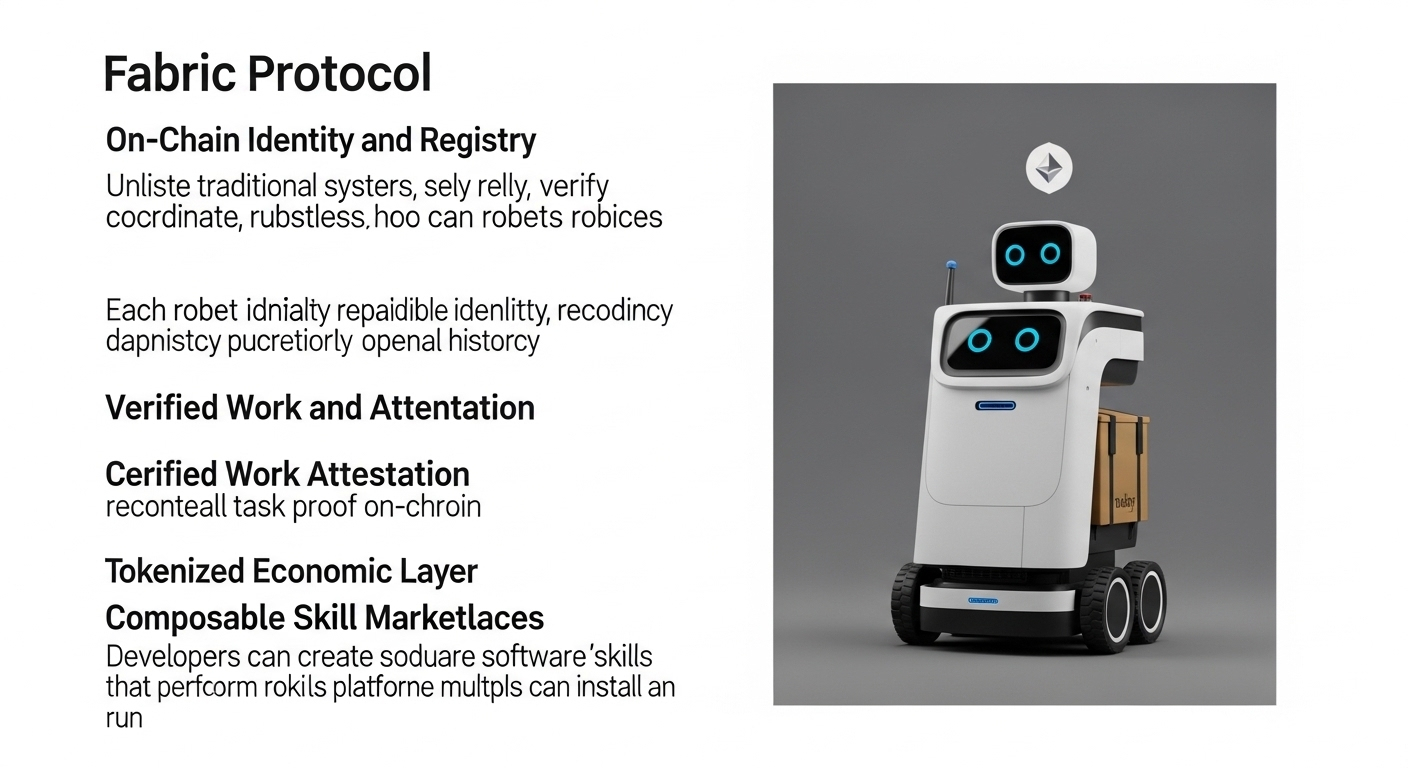
Fabric is a public protocol designed to register, verify, and coordinate autonomous robots and devices. Unlike traditional robotics systems, which rely on proprietary platforms, Fabric leverages blockchain technology to create a transparent, trustless network where developers, operators, and robots can collaborate.
Key components of Fabric include:
On-Chain Identity and Registry: Each robot has a verifiable identity recording its capabilities, ownership, and operational history. This transparency ensures accountability and builds trust in multi-robot environments.
Verified Work and Attestation: Robots generate cryptographic proofs of completed tasks, which are recorded on-chain. For example, a delivery robot can automatically receive payment once its task proof is validated, without the need for a centralized intermediary.
Tokenized Economic Layer: The protocol uses a native token to facilitate payments, staking, and incentivizing contributions. Tokens align incentives between robot operators, skill developers, and auditors, ensuring network reliability.
Composable Skill Marketplaces: Developers can create modular software “skills” that robots can install and run. This allows a single robot platform to perform multiple tasks, increasing versatility and efficiency.
How Fabric Enables General-Purpose Robotics
General-purpose robots differ from single-task robots because they can adapt to multiple functions. Fabric supports this vision through five main mechanisms:
Standardization and Interoperability: On-chain registration of robot capabilities and standardized interfaces enable software modules to work across different hardware platforms. This reduces vendor lock-in and encourages collaboration.
Safe Composition of Skills: Verified attestation ensures third-party skills can be installed safely, reducing the risk of errors or unsafe behavior.
Decentralized Marketplaces: Robots and developers participate in task marketplaces where verified work is rewarded automatically. For example, a warehouse can dynamically assign order-picking tasks to idle robots with immediate payment upon verification.
Governance and Oversight: Fabric incorporates on-chain governance to set operational rules, safety standards, and fee structures. Transparent governance ensures the network evolves safely and fairly.
Incentivized Safety and Innovation: Tokens reward contributions to audits, skill development, and protocol improvements. This creates a continuous incentive for network participants to prioritize safety, efficiency, and innovation.
Practical Applications
Fabric’s design targets real-world scenarios where general-purpose robotics and coordination matter:
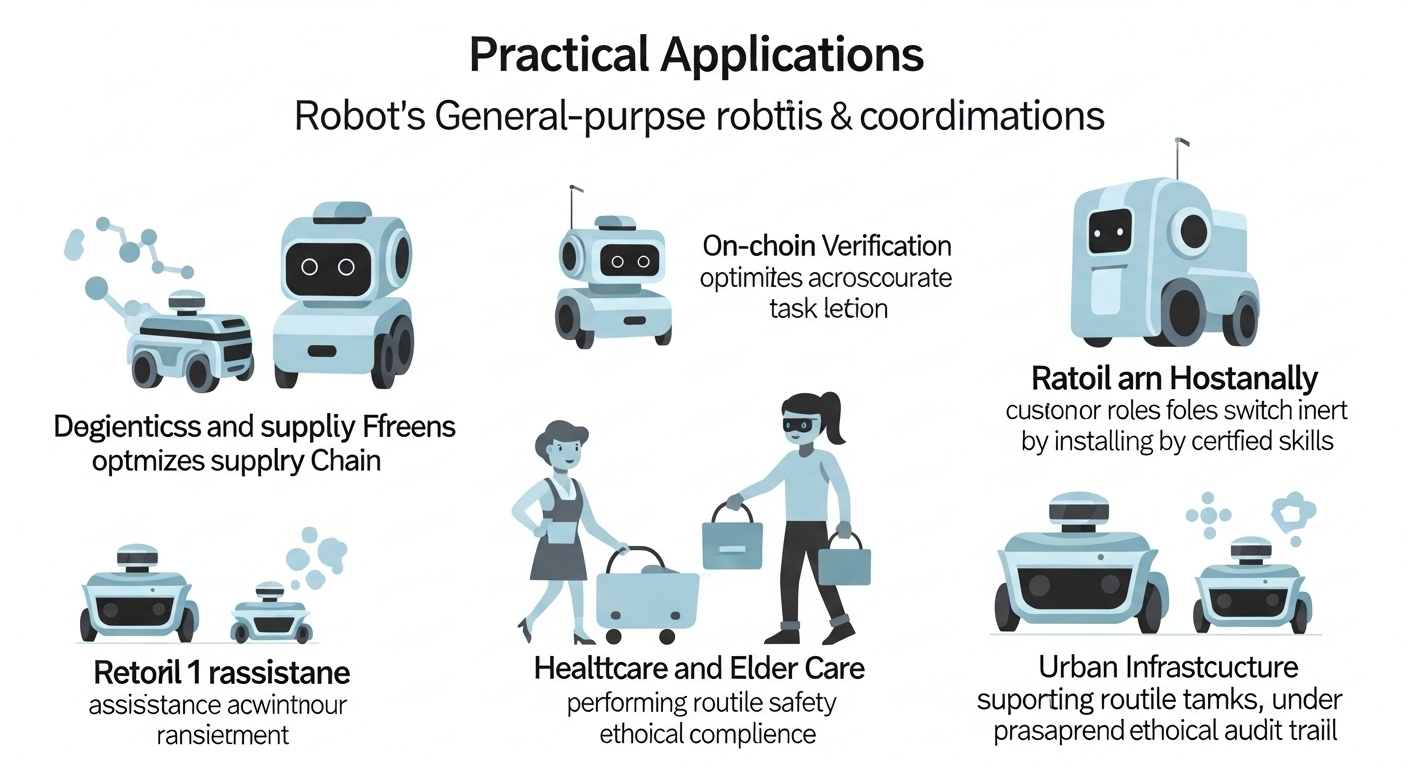
Logistics and Supply Chain: Decentralized fleets optimize deliveries across warehouses, while on-chain verification ensures accurate task completion.
Retail and Hospitality: Robots can switch roles—from customer assistance to inventory management—by installing certified skills.
Healthcare and Elder Care: Robots can support caregivers by performing routine tasks under strict verification, maintaining safety and ethical compliance.
Urban Infrastructure: Municipalities can deploy robots for inspections, cleaning, and minor repairs with transparent audit trails.
Why Fabric Stands Out
Unlike proprietary robotics ecosystems, Fabric creates an open, interoperable network for robot coordination. Its combination of blockchain transparency, skill marketplaces, and tokenized incentives mirrors the way app stores revolutionized smartphones: developers innovate independently, users install safely, and the network enforces trust without central control.
However, challenges remain. Hardware adoption, legal liability, and sensor reliability are essential for success. Fabric provides a framework, but widespread collaboration among developers, manufacturers, and regulators will determine its real-world impact.
Conclusion
The Fabric Protocol offers a practical roadmap for enabling general-purpose robotics in the real world. By integrating on-chain identity, verifiable work, tokenized incentives, and modular skill marketplaces, Fabric allows robots to operate safely, flexibly, and economically.
While adoption and regulatory alignment remain key challenges, Fabric lays the foundation for a decentralized Robot Economy—a system where robots can cooperate, earn, and innovate transparently. For developers, operators, and investors in the crypto and robotics space, Fabric represents a promising step toward unlocking the full potential of autonomous machines in everyday life.
@Fabric Foundation
#ROBO
$ROBO
