
Vanar Chain feels like a dream being slowly pulled into reality. It’s not just another blockchain trying to compete on speed or cheap gas fees. No, at its heart, Vanar is built around a simple but powerful idea: what if a blockchain could understand and reason with data, not just record transactions? Instead of being a dumb ledger that only logs numbers, they want something that feels alive in the way it deals with information. They call this AI-native, meaning artificial intelligence isn’t an add-on, it’s woven into how the network works from day one. That alone makes you sit up and think about the future of Web3 in a different way.
There’s something almost emotional in that shift. I’m reading about a technology that doesn’t just move tokens around or run simple scripts. It wants to reason. It wants to look at data and make decisions the way humans do, only faster and without bias. That’s the promise that draws people in and keeps conversations about Vanar alive months after its initial launch.
When you look at how blockchains work today, they record transactions and let smart contracts execute according to rules. But they don’t actually interpret the information those contracts might depend on. For example, if you want to automate payments based on the contents of a legal contract or an invoice, most blockchains need complicated bridges, oracles, and off-chain systems to even attempt that. Vanar is built to handle that kind of thing natively. That’s a leap away from the usual way of thinking about decentralized systems.
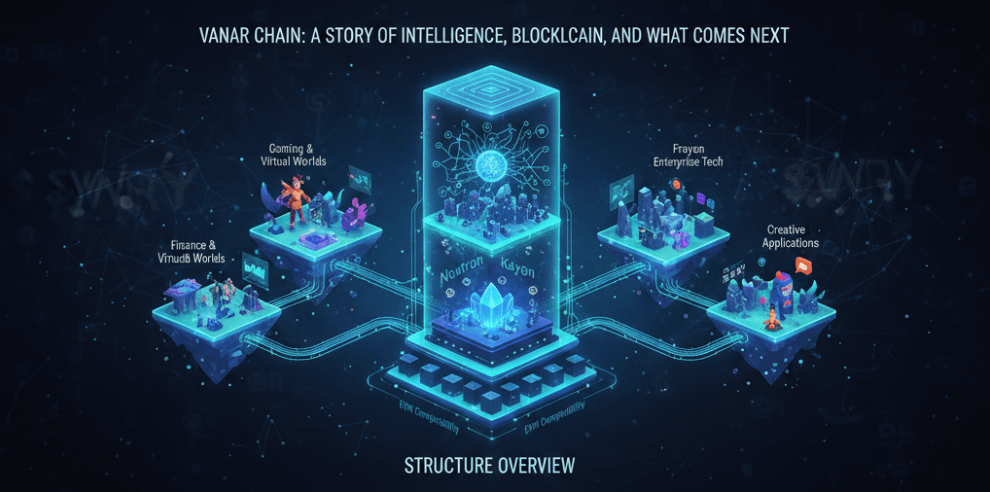
At the center of this new approach is what they call the Vanar Stack, and it has pieces that each carry a lot of weight. One of these is Neutron, a system designed to compress data into tiny pieces called Seeds. These Seeds can be stored directly on the blockchain in a verifiable way. Instead of pointing at big files that sit somewhere else and praying those links don’t break, Vanar puts the essence of the data right on chain. It’s a bold attempt to bridge the gap between off-chain information and on-chain reasoning that so many systems struggle with.
If Neutron is the memory of the chain, then Kayon is its reasoning engine. This is meant to allow applications to query data in a natural and contextual way. Instead of simple, rigid rules, developers can write logic that asks questions about meaning and content, and then act on those answers. You start to see how this feels different from the usual smart contract model. It’s not about checking a number and executing a payment. It’s about understanding what the data means and responding accordingly.
That’s where the emotional pull comes in. We’ve been building ever more complex systems around data for years, but they remain brittle and dependent on translations between systems. Here is a blockchain that says, “I can hold data meaningfully, and I can reason about it.” That’s a shift in how we think about decentralized applications — from passive record keeping to active interpretation. It’s the sort of change that makes you imagine whole new kinds of apps being built, not just faster payment railways.
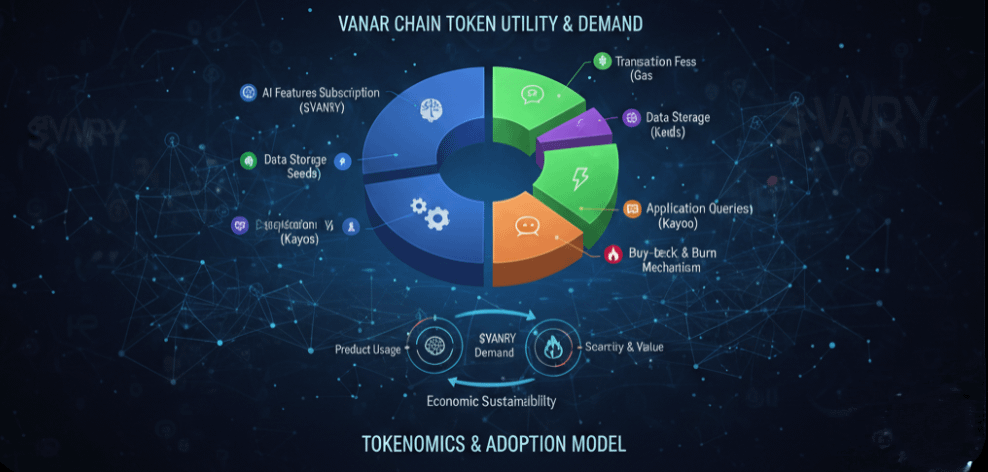
And this isn’t theoretical. The products are already live and moving into real usage. Tools like myNeutron let users upload files, compress them with Neutron, and then have those files available for contextual queries via Kayon. They are transitioning these tools into subscription models where $VANRY tokens — the native currency of the network — will be used to access them. That ties token demand directly to actual product usage, not just speculation.
There’s a real sense of evolution here. Instead of blockchains that simply do what they’re told, Vanar wants blockchains that think. That’s a subtle but profound shift — from execution to interpretation. And because the chain is EVM-compatible, developers who already know how to build on Ethereum don’t have to relearn everything from scratch. It’s still familiar territory, just with a new toolkit that lets them think in context and not just in logic gates.
Now, let’s talk about the token behind all of this. $VANRY isn’t just used to pay for simple gas fees. In a world where Neutron and Kayon are charging subscriptions to access their deeper features, $VANRY becomes the key to unlocking that intelligence. This means usage of the chain’s AI features could create real, ongoing demand for the token — not just hype-driven speculation. The team is even implementing buy-back and burn mechanisms to tie scarcity and demand more tightly, which feels like a thoughtful attempt to build economic sustainability, not just noise.
Of course, no story about innovation is complete without mentioning risks. People in the space remind each other that embedding intelligence into a blockchain is not simple, and many projects talk about AI but still rely on systems outside the chain to do heavy lifting. Vanar’s on-chain intelligence model confronts that complexity head-on, but it’s still early. Adoption by developers, actual usage of the AI tools, and growth in meaningful on-chain activity are what will determine if this vision becomes reality or remains an interesting experiment.
There’s another layer of excitement here too. Vanar has roots in gaming and virtual worlds, and even its ecosystem reflects that history. It’s not just for finance or enterprise tech, it’s also for immersive experiences where on-chain assets and intelligent logic can coexist in ways that feel natural to users. That variety in its DNA makes the narrative feel less narrow and more human — a space where creators, players, brands, and developers can all find something meaningful.
And when you step back and take it all in, you begin to see why people get emotional about projects like this. It’s not simply technology for the sake of novelty. It’s a vision of a future where decentralized systems don’t just store information, but can understand and act on it in ways that serve real people and real businesses. It’s a future where your data isn’t just a record, it’s part of a living system that can respond and adapt.
In many ways, Vanar Chain feels like a story about the next chapter of the internet itself. The early Web was about static pages. Then came apps that could interact with us. Now we’re moving toward systems that can interpret and reason about the world they see. If Vanar achieves even a fraction of its goals, it won’t just be another blockchain. It will be a foundation for applications that think, understand, and respond, not because someone manually coded every possibility, but because the system itself has been designed to handle context and meaning.
And that’s a story worth paying attention to.
