
A Story About Speed That Matters to Everyone
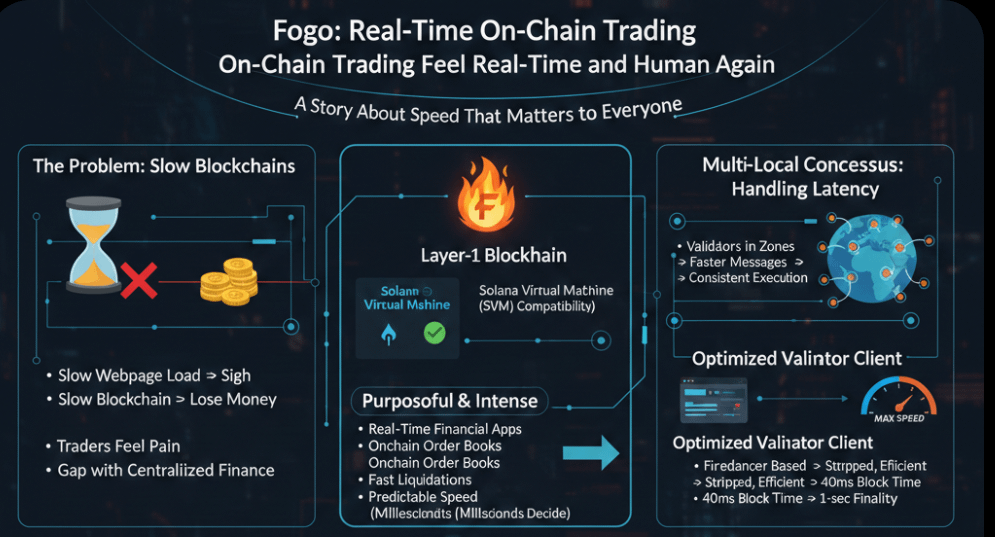
There are things in life that only hit you when you experience them. Waiting for a slow webpage load makes you sigh. Waiting for a slow blockchain confirmation can make you lose money. Traders feel this pain every day. They’re running complex strategies, trying to manage risks, and when the network rules move slower than they want, it’s not just frustrating, it’s costly. Most blockchains today weren’t built to match the speed of centralized infrastructure traders rely on. That gap between what traders expect and what blockchains deliver has kept big financial players at arm’s length from decentralized finance. Fogo aims to change that by making real-time execution possible onchain.
What Fogo Really Is
Fogo is a Layer-1 blockchain built to be fast where it counts most. It runs on the Solana Virtual Machine (SVM), so developers familiar with Solana tooling can bring their apps over without rewriting everything. That compatibility alone makes it feel welcoming and practical for builders.
But underneath that friendly surface is something that feels purposeful and intense. Fogo was designed for real-time financial applications. That means onchain order books, liquidations that happen when they should, and markets that update as fast as prices move. It doesn’t just aim to be quick on average. It aims for predictable speed — the kind of performance that matters when milliseconds decide profit or loss.
How Fogo Handles Latency Differently
If you’ve ever heard people talk about why blockchains are slow, a lot of it comes down to how consensus and communication happen between nodes scattered around the world. Fogo addresses this head on. Instead of letting validators sit anywhere with unpredictable delays, it introduces multi-local consensus. Validators operate in zones where they’re physically closer, so messages travel faster, delays shrink, and execution becomes more consistent.
Another part of the design is that Fogo uses a single high-performance validator client based on Firedancer. This is an optimized version of the software that runs the network, stripping out slow parts and emphasizing speed and efficiency. This setup eliminates the uneven performance you might see when different nodes run different software.
Together these changes help Fogo hit block times around 40 milliseconds and finality in just over a second. That feels almost instantaneous compared with older blockchains, and it’s in the ballpark where serious financial systems start to pay attention.
Developers Don’t Have to Start From Scratch
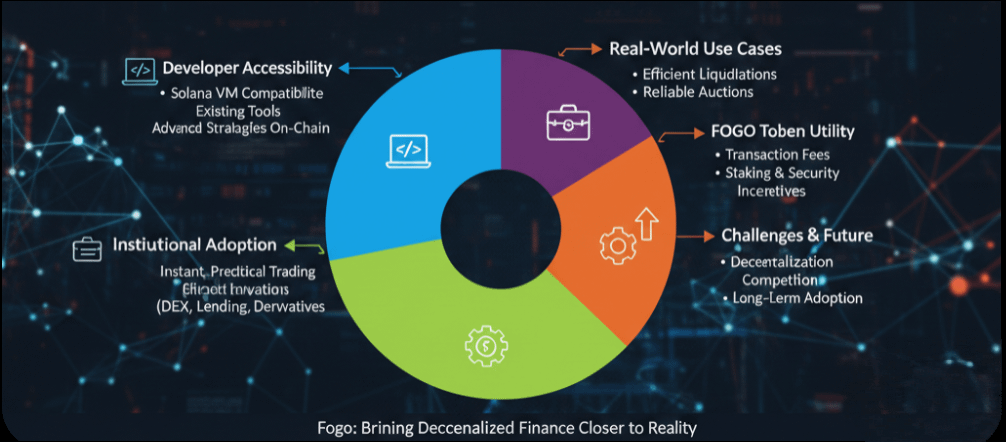
One of the things that makes Fogo feel practical is that it didn’t reinvent the wheel completely. By remaining compatible with the Solana Virtual Machine, developers can take existing Solana programs and tools and run them on Fogo with minimal changes. Instead of learning a brand-new language or framework, they can get to work faster and bring real use cases to life.
For builders who want to innovate in areas like decentralized exchanges, lending markets, or even derivatives, this compatibility matters. It makes the path from idea to actual running application smoother and less risky.
How This Could Attract Institutions
If Fogo delivers on its promise, it could tilt the way institutional minds see blockchain. Hedge funds and professional traders are used to systems where execution is almost instant and predictable. They’re not patient with delays or surprises. By closing that gap, Fogo creates an environment where advanced strategies can run without having to move offchain.
Imagine onchain order books that update as fast as a price feed, where you don’t lose your edge because someone’s transaction took a few extra seconds. Imagine precise liquidations that protect funds instead of causing chaos because the network lagged. Imagine real-time auctions that finish cleanly because confirmations are dependable. That’s the kind of world Fogo is built to make possible.
Real Stories, Real Use Cases
People building on Fogo aren’t just experimenting with speed for its own sake. They’re thinking about things that were once hard or impossible onchain. Traders want predictable execution for high-frequency strategies. DeFi platforms want liquidation engines that don’t leave money on the table. Auctions want real-time settlement so they don’t lose credibility with participants. When speed becomes part of the user experience instead of a barrier, it changes how people think about trust and reliability onchain.
The Role of the FOGO Token
Fogo has its own native currency, called FOGO. It’s used to pay for transactions, help secure the network through staking, and align incentives across the ecosystem. Validators earn rewards for participating honestly and efficiently. Users and builders benefit from transparent fee mechanics that support the network’s long-term health.
This isn’t about hype. It’s about creating economic incentives that make it easier to sustain a high-performance blockchain that people and institutions can trust.
Challenges and the Road Ahead
No real-world system is perfect. By focusing so much on speed and low latency, Fogo makes trade-offs. Validator placement, co-location, and performance optimization raise questions about decentralization and how decisions get made. There’s also competition. Many projects want to be the fastest or most efficient, and only time will tell who wins real adoption.
But that’s where the story gets interesting. If Fogo can stay true to its mission, build a strong ecosystem, and show that it can handle real workloads from real users and institutions, it could be a turning point. The world doesn’t need another blockchain that promises speed alone. It needs systems that feel alive, usable, and dependable — the kind of networks that professionals and everyday users can trust equally.
Why Fogo Matters in the Bigger Picture
When I think about where the internet is headed, I see a future where digital finance feels just as real and responsive as anything you use today. A world where decentralized systems aren’t slower cousins of traditional technology, but partners in a new financial reality. If Fogo’s vision becomes real, we won’t just see faster transactions. We’ll see a shift in how people interact with money, markets, and shared infrastructure.
This is about more than code and numbers. It’s about bringing the promise of decentralized finance closer to the world we live in — where speed, trust, and fairness aren’t just ideals, they’re everyday reality.
