
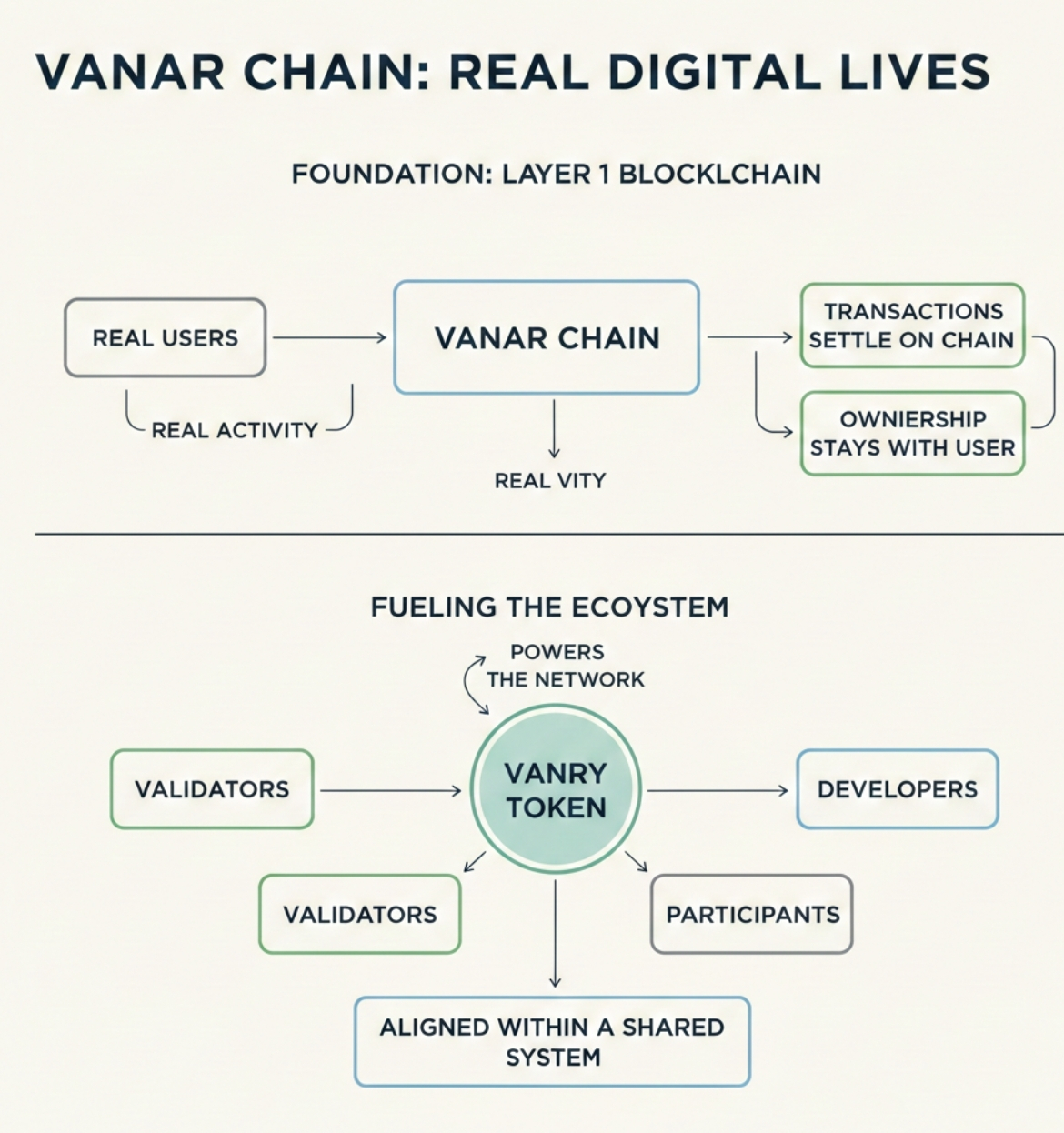
Vanar Chain makes the most sense to me when I stop looking at crypto as a place where people speculate and start looking at it as a place where people live part of their digital lives. At its foundation this is a Layer 1 blockchain built to support real activity from real users. Transactions settle on chain. Ownership stays with the user. The VANRY token powers the network and keeps validators developers and participants aligned within a shared system. That is the simple version. The deeper story begins when I look at why it was built this way and who it is trying to serve.
I’m seeing a project that was designed with mainstream users in mind rather than only early adopters. They’re coming from a background that understands games entertainment and brand ecosystems. That matters because the next wave of adoption is unlikely to arrive through technical arguments alone. It will come from environments where people already spend time. If the infrastructure underneath those environments is stable and easy to use the transition into Web3 can happen without people even realizing it.
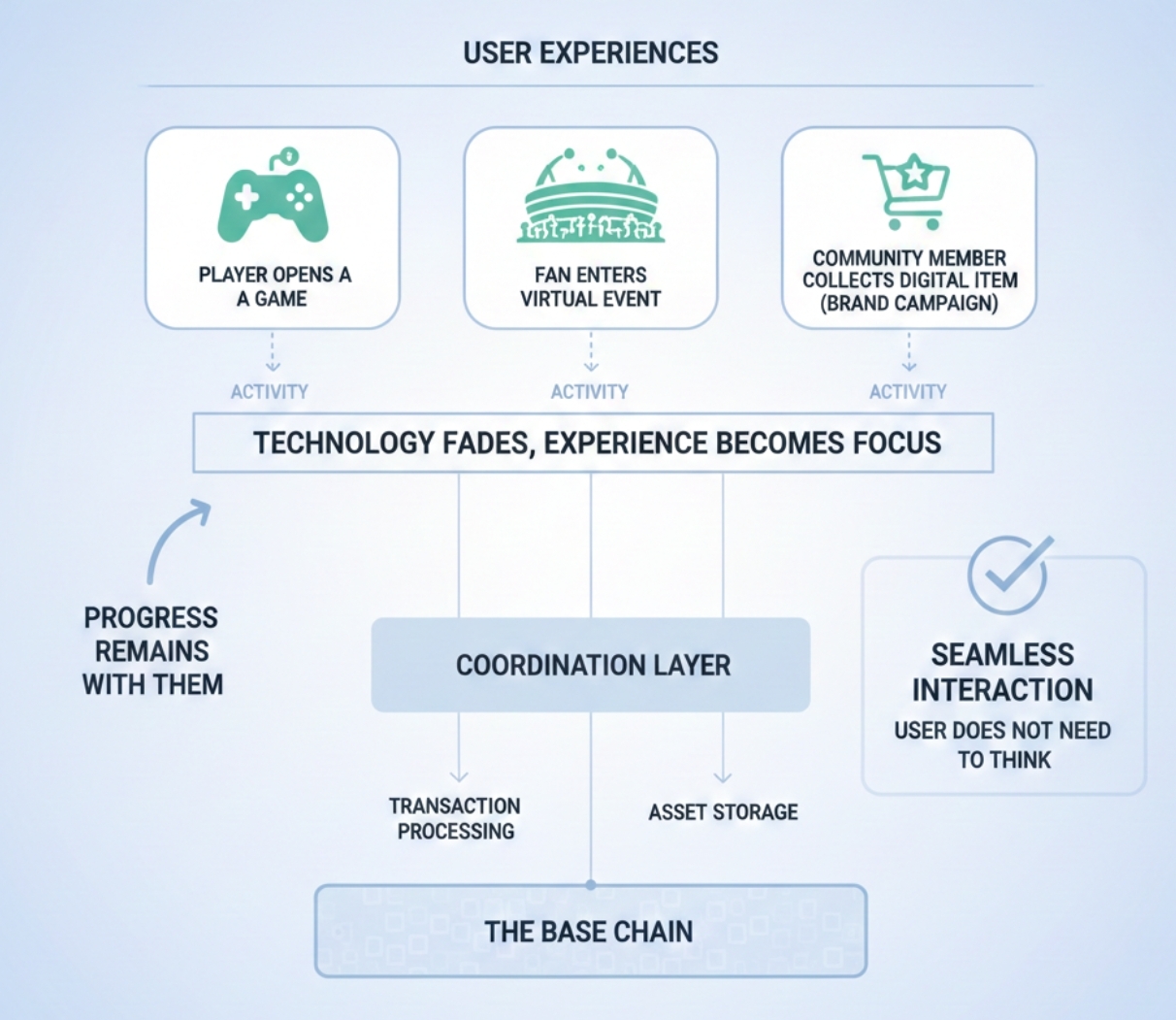
When I picture how the system works I imagine the base layer quietly coordinating activity across multiple digital spaces. A player opens a game. A fan enters a virtual event. A community member collects a digital item from a brand campaign. All of these interactions can settle on the same chain. The user does not need to think about how transactions are processed or where assets are stored. They only see that their progress remains with them. If It becomes that seamless the technology fades into the background and the experience becomes the focus.
They’re building across several verticals at once including gaming metaverse environments AI integrations eco initiatives and brand solutions. At first that sounds ambitious but it also reflects how people actually behave online. No one lives inside a single digital category. A person who plays games may also attend virtual events follow creators and interact with brands. If the infrastructure allows identity and value to move across those contexts it creates continuity. That continuity can encourage deeper engagement because users feel their time and effort carry forward.
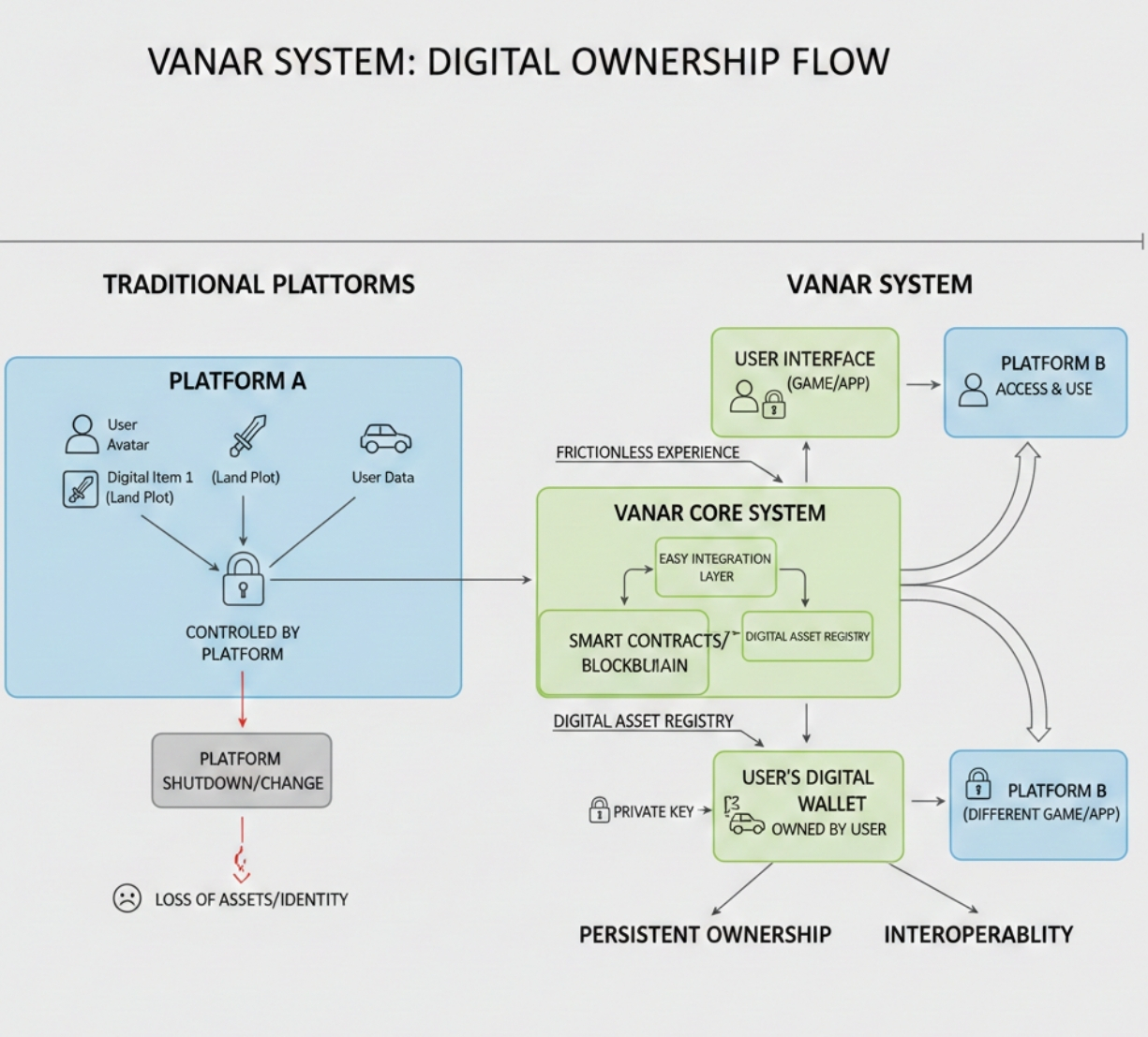
I find myself thinking about how digital ownership has evolved. In the past most online platforms kept control over user assets and identity. If a platform shut down or changed direction users often lost access to what they had built. Blockchain introduced the idea of ownership that persists beyond a single application. Vanar seems to be leaning into that idea while trying to remove the friction that has slowed adoption. If the system allows people to own their digital items without forcing them to learn complicated steps it becomes easier to integrate into daily life.
We’re seeing real examples of how this might unfold through environments like Virtua Metaverse and the VGN games network. These are not just concepts on paper. They are spaces where users interact create and participate. If those spaces grow while staying connected to the same base layer the network begins to feel like a shared environment rather than a collection of isolated apps. I’m paying attention to that because adoption often happens gradually. It builds through repeated use rather than sudden breakthroughs.
The architectural choices behind Vanar reflect a focus on accessibility. The goal appears to be creating a system that supports high activity without overwhelming users with technical requirements. The VANRY token sits at the center of the network economy. It powers transactions supports staking and helps align incentives across the ecosystem. I’m They’re both aware that token models can shape how a network evolves. If the token is tied to real activity within applications it can strengthen the ecosystem. If It becomes detached from usage it risks becoming a distraction. The long term health of the network may depend on keeping that balance.
I often think about what true progress looks like for a project like this. Price movements and short term attention do not tell the whole story. I’m watching for consistent user engagement. Are people returning to the games and virtual spaces. Are brands running campaigns that attract repeat participation. Are developers continuing to build because the environment feels stable and supportive. These signals show whether the infrastructure is supporting something meaningful. If daily activity grows steadily it suggests that the system is finding its place.
Visibility on exchanges such as Binance can bring attention and liquidity. That can help new users discover the ecosystem and give the token a broader market presence. But I remind myself that long term value comes from continued participation. If users stay because the experience feels worthwhile the network has a stronger foundation. We’re seeing the market slowly shift toward valuing retention and real usage over momentary hype. That shift could favor projects that focus on building environments people actually want to return to.
It would not be honest to talk about any project without acknowledging the risks. Technical complexity is always a challenge for systems trying to scale across multiple verticals. If growth outpaces stability the user experience can suffer. They’re building something ambitious and that requires careful coordination. Market cycles can also influence progress. If It becomes harder to maintain funding or developer interest during downturns momentum can slow. We’re seeing how projects that focus on real usage rather than short term sentiment tend to navigate those periods more effectively.
Competition across Layer 1 networks is intense. Many projects are trying to position themselves for mainstream adoption. I’m watching to see whether Vanar’s integration across gaming entertainment AI and brand ecosystems gives it a distinct identity. If it succeeds in connecting those worlds while keeping the experience simple it may stand out. If not it risks blending into a crowded landscape. The difference may come down to whether users feel a sense of continuity and ownership that keeps them engaged over time.
When I think about the long term vision I imagine digital environments becoming more connected and persistent. People already move between games social platforms and virtual spaces every day. If infrastructure can support identity and ownership across those spaces it could change how digital life feels. They’re building toward a network that grows with its users. If It becomes a place where participation feels natural people may stay longer and invest more of themselves in the ecosystem.
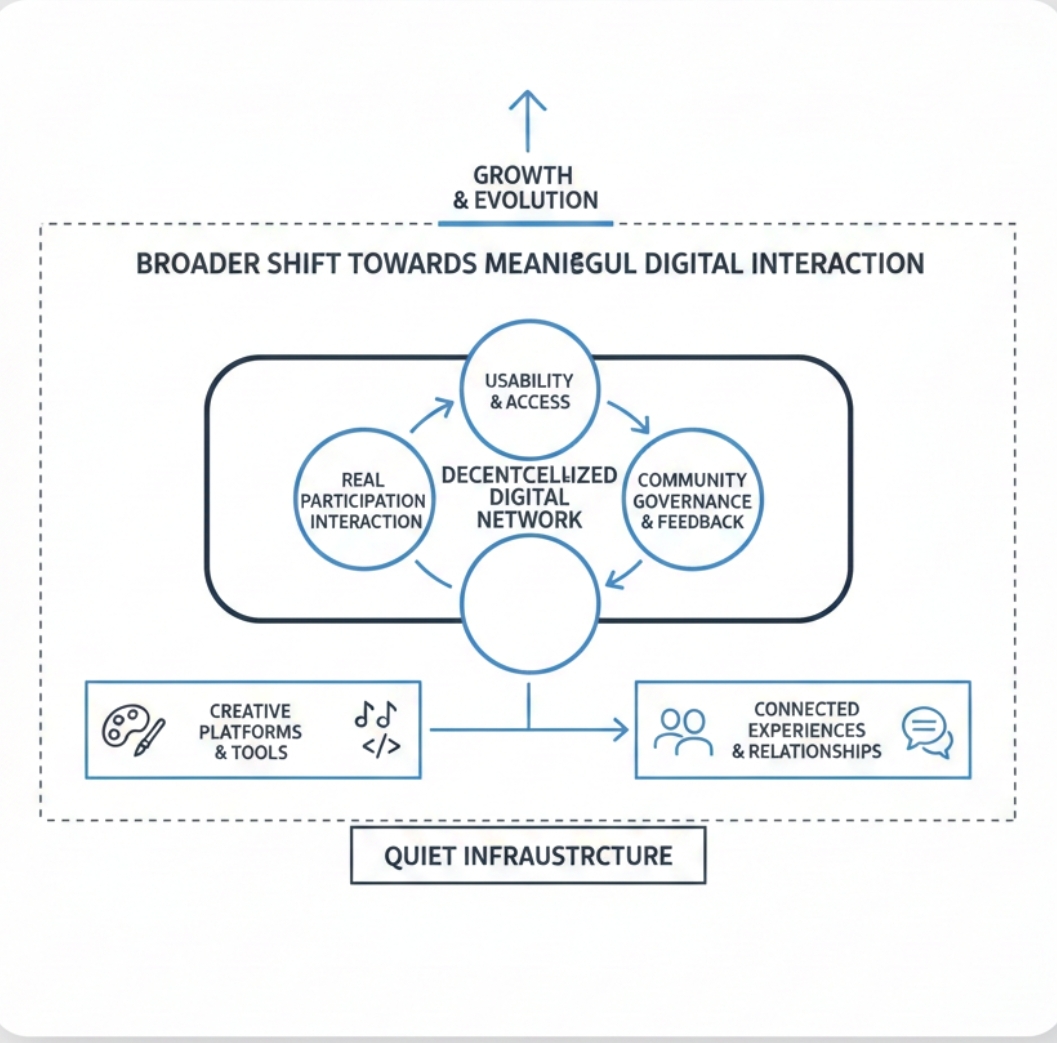
There is something emotional about watching a system try to grow alongside its community. I’m They’re both part of a broader shift where digital experiences feel more meaningful and connected. If the network remains focused on usability and real participation it may find a steady path forward. The idea of infrastructure that quietly supports creativity and connection resonates with me. It suggests a future where technology does not demand attention but enables experiences that feel richer and more personal.
As I reflect on everything I see a project trying to build infrastructure that supports real digital life rather than only speculative activity. The foundation is designed to handle gaming AI metaverse and brand ecosystems while keeping the user experience simple. If progress continues through steady development and genuine engagement the network may become a subtle but important layer in the digital landscape. We’re seeing how infrastructure shapes the way people interact and create online. If Vanar continues to evolve with its users and stays grounded in practical value it could become a space where digital ownership and participation feel natural lasting and quietly transformative.
